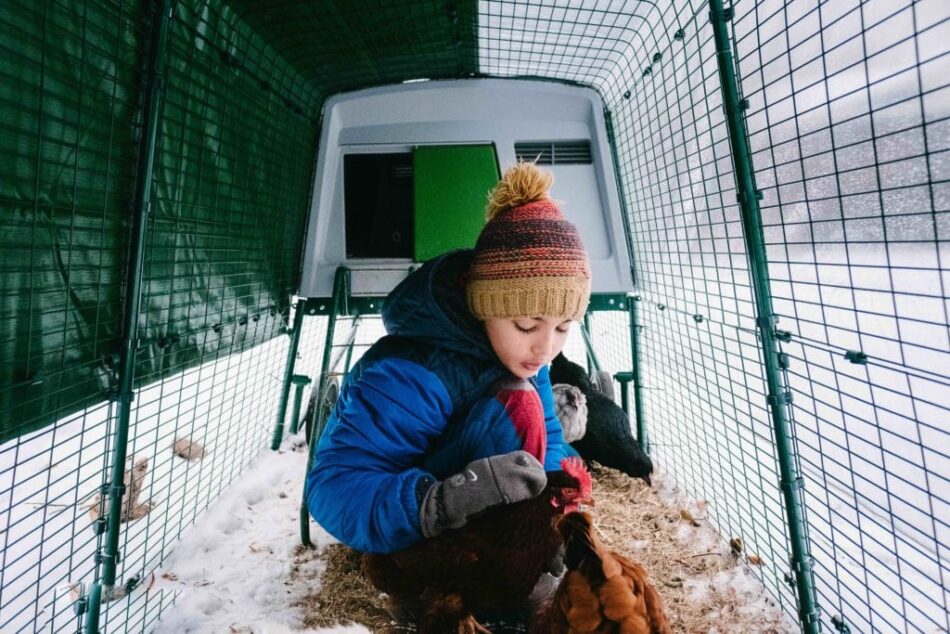
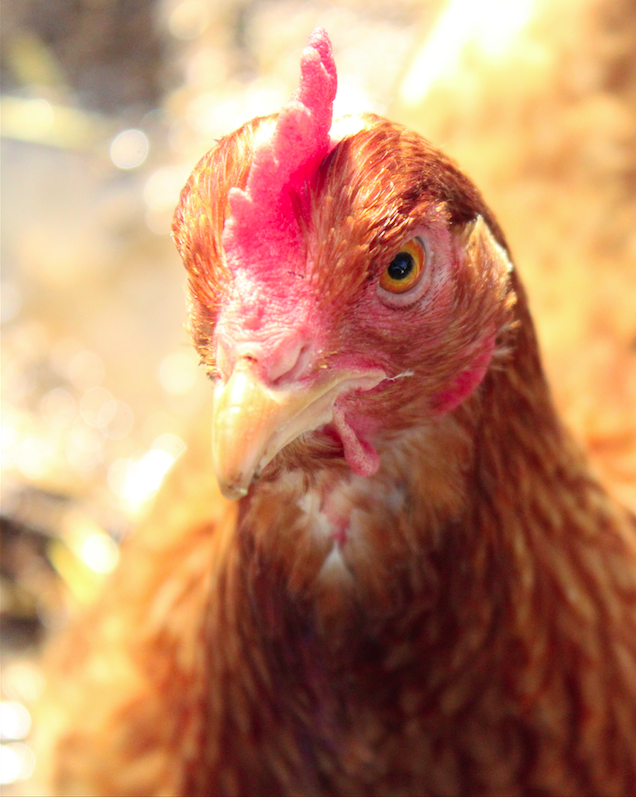
On average backyard chickens live to an age of six to eight years, but there are of course exceptions. How old a chicken will become depends amongst other things on the breed and how a chicken is kept. Heavy layers exhaust themselves with a lifespan of just three years, others can live up to ten years. According to the Guinness World Records world’s oldest chicken is Matilda, a Red Pyle hen from Alabama that died at the age of sixteen (1990-2006). A hen is considered a senior around the age of five. If you are not sure about the age of a chicken, there are signs that will tell you your hen is getting older.
As a chicken gets older the texture of the comb will slightly change and she will likely have some scars from being pecked by other chickens. The feet and legs tend to thicken and if your hen has spurs, you know she’s not a youngster anymore (generally chickens grow spurs around three years of age). Arthritis may cause your older chicken to move stiffly, and you might notice she walks a bit slower and more carefully. And of course, the egg production of an older hen will decrease. The average chicken lays eggs for four to five years on a regular basis, with the peak of the egg production around 18-24 months. Already after two years, the egg production tends to drop. When you start seeing soft or thin-shelled and misshapen eggs, you know your hen is about to retire from egg laying altogether. But with most breeds living to age seven or beyond, you’ve got a few more years to enjoy the companionship of the hen that has served you and your family so well.
CARING FOR OLDER CHICKENS
Caring for older hens isn’t difficult and really isn’t much different than caring for them when they’re younger but there are a few things you can do for them to make sure they are healthy and comfortable.
Lower the perch in the run and/or coop Senior chickens can start having mobility problems due to arthritis or joint inflammation. By lowering the height of the perch to one or two feet of the ground its easier for your old hen to hop onto it, protecting her joint. Building a ramp up into the coop might be necessary.
Predator proof run Old chickens don’t move as fast as they used to. Providing them with a predator proof space is important to keep them safe. It’s best to supervise your chickens when they are free ranging. You may want to provide your older chickens with a separate coop and run to prevent younger, more aggressive hens from pecking them.
Accessible food and water Make sure food and water containers are easily accessible. This means the food and water containers must be on a easily accessible height. It can also be a good idea to have two sources of food and water: one in their run area and if they are free ranging one outside. Older chickens may not be able to range as far for food and water.
Feeding older hens If your entire flock is older and none of the hens is laying any longer, you can give the whole flock a chicken grower feed since they don’t need the additional calcium that a layer feed provides. If you are feeding different age groups together or ad new chicks to the flock, the entire flock can be fed the chicken grower feed from the time the new chickens are eight weeks old up until the laying age of 16 to 18 weeks old. After that the new layers will need a laying feed. The layer feed won’t hurt the older hens, as the calcium is good for their bones.
Nail clipping Older chickens may not be wearing down their nails with activity like foraging and scratching. If the claws are curling round then they will need trimming. Consider nail clipping as part of caring for old chickens if your chickens have long nails.
A good vet Try to find a vet near you who specialises in poultry. Do this and register in advance of having problems. Arthritis, egg failure, joint inflammation, gout, ascites, tumors, adenocarcinoma and salpingitis are issues that can come up with chickens of any age, but more so in old chickens.
BENEFITS OF OLDER HENS
In their own way, older hens contribute well past their productive egg laying years. Older hens still produce manure, which is a great fertilizer for your garden. Older hens still like to eat bugs. You’ll notice a reduction in the number of ticks and snails in your garden when you keep a flock of chickens. Furthermore, older hens are more likely to go broody and be available to raise the chicks you purchase or hatch.
Nathalie is the owner of the Instagram account My Backyard Paradise. Together with her husband and their three teenage daughters she runs her own ‘mini backyard farm’ in Belgium. The beautiful pictures she shares with her Instagram followers show that this truly is a backyard paradise. In June 2018 Nathalie decided to extend her mini farm with three ex-battery hens. Follow their journey to recovery in the two-part photo diary she kept for us.
A laying hen, one that can lay up to 300 eggs a year, is what we were missing. During autumn, our purebred chickens don’t lay any eggs for a long time. They instead take spend their time and energy renewing their plumage and waiting for the days to get longer again. Last year we didn’t have any eggs for over 3 months despite having more than ten hens! We decided that if we wanted fresh eggs during autumn, we had to buy laying hens.
We always buy our new chickens from a smaller trader or a hobby breeder, so we can actually see the chickens and know they have access to grass, clean water and decent housing. But we like the idea of rescuing a few laying hens destined for slaughter by giving them a good life in our garden. The life of battery hens ends after just sixteen months. Their bodies need time to recover and their egg production will stop. This means a loss for the industry. Besides that, after each moult the egg production will drop, and the industry does not accept that!
So that’s what we did. First thing to do was find a place where you can rescue commercial laying hens from slaughter. The first option we came across was www.redeenlegkip.be (‘Save a battery hen’), a Belgian website where you can buy or adopt a laying hen. If you decide to adopt a hen, you’ll pay a monthly contribution of €5 and get 24 egg per month in return. When you adopt or buy a chicken, the organization ensures the chickens are collected from the companies and given appropriate first aid. However, we wanted to experience this ourselves. After continuing my search, I came across another Belgian website www.lespoulesheureuses.org (recently also available in France). They give you the opportunity to collect the chickens yourself, so you’ll know the address and code (the one you can find on the egg) of the company.
We then had to wait for the right weather. The best time to save a laying hen is when you can give her the ideal conditions to recover. They often don’t have many feathers left and have probably never been outside their barn, where the temperature is always at least 18 degrees! They’ve never seen rain and you should also be careful with draught and wind. You don’t want them to get ill, they have experienced more than enough stress already.
Week 1
On June 16th 2018, it is finally happening. I reserved three Isa Brown chickens from a code 2 company. Code 2 means the eggs from this company are sold as free-range eggs. Sounds good, you might think…
Free-range eggs from the commercial industry come from chickens that only have access to barns. They have perches, nesting boxes and scratching areas with some straw on the floor. There is a maximum of nine chickens per square meter and debeaking is allowed. This is probably not what most of us have in mind when we think of free-range chickens…
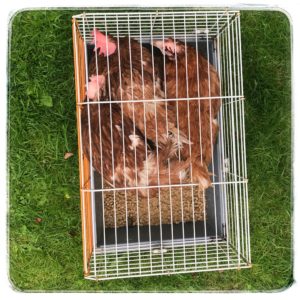
My youngest nine-year-old daughter is joining me on my way to pick up the chickens. I tell her in advance that the chickens will be in a bad shape and will look nothing like the chickens we have at home, that she isn’t allowed to pick them up and cuddle them, and that we have to take care of them first. We are not the only ones here today to buy chickens. An older couple buys two chickens and there is someone with a trailer with 50 chicken cages. People keep on coming. We ask a staff member if we can have three chickens. He looks at my daughter first before turning around to get them for us. Of course, we are not allowed in the barns, we’re not even allowed to take a picture. The chickens we get are in a much better condition than the ones the older couple got, ours still have a lot of feathers. Maybe I shouldn’t have taken my daughter with me, to get a more honest impression of the condition of an average laying hen. The man probably had our daughter in mind when he chose our chickens. After paying €3 per chicken, the life these chickens deserve can finally begin. At home everything is ready for them. After driving 10 minutes, my daughter and I look at each other. It’s smelly in the car. And it’s a strange smell, not like normal chicken manure, but a chemical, unnatural smell. The chickens are quiet, I hope they will survive the one hour drive home…
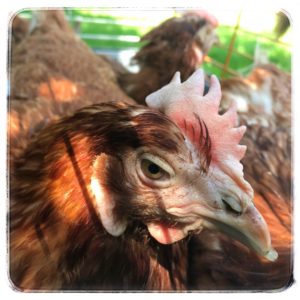
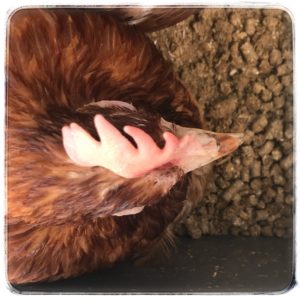
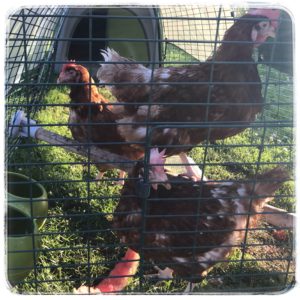
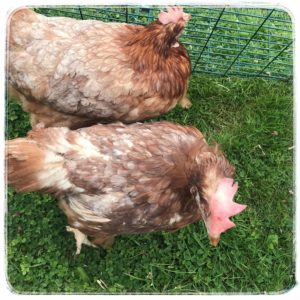
When we get home, we inspect them carefully. They seem numb, or are they frozen with fear? They still have lots of feathers, but they are dull and not shiny like the feathers of a healthy chicken. Their feathers are tangled and the tail feathers don’t look good at all. Their gaze is blank and their comb is very pale. Their toenails are way too long and curly, and there is manure stuck under them. Clearly, they haven’t been able to scratch around that much. The beaks of our chickens have been trimmed. This means the top of the beak has been cut off when they were only ten days old. This is very painful and is done to prevent feather pecking. Chickens do this when they are stressed, for example due to limited foraging opportunities.
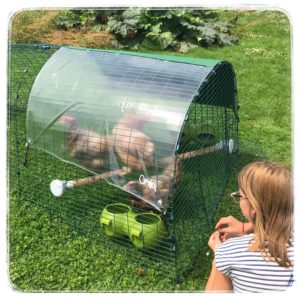
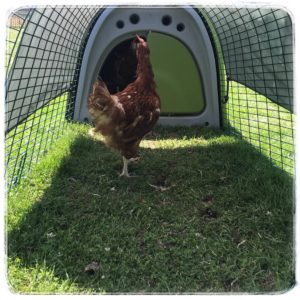
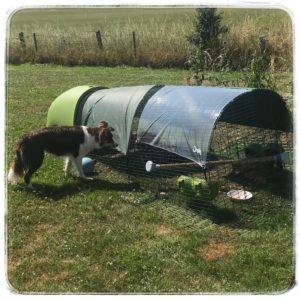
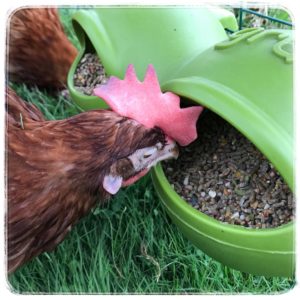
It’s time to treat them against parasites such as lice and worms. We use Diatom Earth, a natural product used against all kinds of parasites. They need to be quarantined first. For this, we give them a temporary home in our Eglu Classic from Omlet. It has a 2 meter run and we can easily move it around in the garden so they have access to fresh grass every day. It’s also very easy to clean. We lift the chickens out of their cage and watch carefully how their feet touch the grass for the very first time. They seem surprised and for a few minutes they just stand still, until one hen realizes she can, and is allowed to, move. Slowly but surely, they cautiously start to explore their run. While the children are watching the chickens, I add the first dose of medication to their drinking water. We use Avimite, a product against lice and mites. The first week they need this on a daily basis, then weekly for the next five weeks. They soon find their water and it looks like they haven’t had any for days. Usually we don’t feed our chickens layers pellets so I had to buy them, because this is the only thing our new chickens have ever had. In the evening we help the chickens into their Eglu where they can safely spend the night.
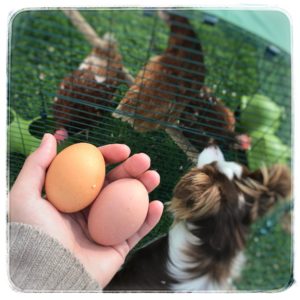
When I open the coop the next morning they don’t want to come out. After an hour we get them out of their coop and notice they have already laid three eggs, one in the nesting box and two on the roosting bars. Because of the medication, we cannot eat their eggs for the next few weeks. Sad, but we just don’t want to take any risk. We have to discard them.
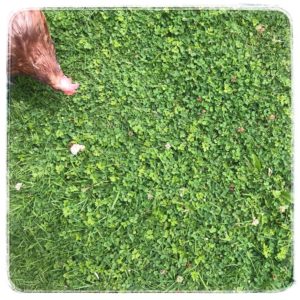
The rest of the day the chickens sit outside. They eat clover and grass for the first time and seem to realize this is not bad at all. The second and third night we have to help them into their Eglu, but from then on they finally realize that this is their new home. In the morning they come outside when I open the door and after a few days they only use the nest box to lay their eggs. Their eyes are getting brighter and they start to establish the pecking order. They are more lively than the first few days, but still nothing compared to our other chickens. Although they aren’t afraid anymore when we come near, they don’t allow us to touch them. This is hard for the children who want to cuddle them to make them forget their past. But the chickens first have to get used to their new environment, to us, and to their new life.
Week 2
We only have to repeat the red mite treatment once a week now and we can start with the deworming. This treatment, which they need five days in a row, can also be added to their drinking water. The hens give us two to three eggs every day. It’s now time to gradually change their diet. They are used to their new home, they’re not scared anymore when we come near or when our dog wants to sniff at them. They clearly defined their pecking order. We want the very best for our animals, and this also includes a rich and varied diet. Our chickens get Garvo but our 3 laying hens need something extra, a mineral and vitamin boost. We give them Alfamix, a very rich grain mixture with pellets and amphipods. But when I mix this with their layer pellets, I notice that they only eat their pellets and not the new food. They do eat a lot of grass and clover. Slowly but surely their combs are getting redder.
During the weekend, our youngest daughter decides it is time for them to free range in the garden. They love it, and really enjoy the dust baths. But trying to get them back into their Eglu is less enjoyable. Finally they decide to go back into their home. Our daughter has learnt that they are not ready to discover the great outdoors just yet…
Come back in a couple of weeks time to read part two of the diary!
Thinking about keeping backyard chickens for the first time? You’re not alone. With so much information out there, it can feel overwhelming to know where to start. That’s why we’ve created this easy-to-follow chicken checklist, designed to help you confidently set up your flock. We’ll cover everything you need to know about choosing the right chicken coop, run, enrichment, weatherproofing, feed, bedding, and cleaning. Let’s make your chicken-keeping journey simple and enjoyable.
Chicken Coops for Beginners
Your chicken coop is the heart of your flock’s home. The right coop depends on how many chickens you plan to keep, but there are a few essentials every beginner should look for:
Easy to clean
Durable and weatherproof
Predator-resistant
Plastic chicken coops are a fantastic choice for beginners. They’re simple to clean, don’t harbor red mites like wooden coops, and offer excellent weather protection. Wooden coops, while traditional, require frequent maintenance, are not waterproof, and often become breeding grounds for mites.
If you’re just starting out, the Omlet Eglu is ideal. The Eglu Go and Eglu Go UP are perfect for 2 to 4 chickens, making them great for small flocks. These coops can be cleaned in just five minutes, keep your hens safe, warm, and dry, and require zero maintenance. If you think you might want to expand your flock in the future (and trust us, “chicken math” is real), consider the Eglu Cube, which houses up to 6 large hens, or the Eglu Pro, which can accommodate up to 10.
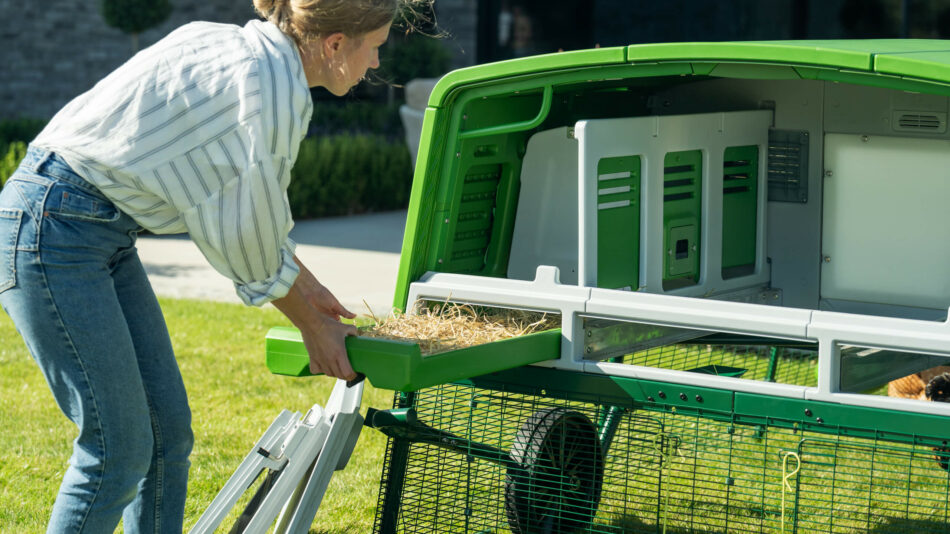
All Omlet coops come with pull-out droppings trays, nesting areas, roosting bars, and a back door for easy access. The Eglu Cube and Eglu Pro also feature separate Egg-port doors for even easier daily egg collection.
Chicken Coop Runs
A secure chicken run is just as important as the coop itself. Your run should be made from strong materials to keep predators out and provide enough space for your chickens to roam.
Omlet’s attachable coop runs are designed with anti-tunnel skirts to stop predators from digging in, and strong steel mesh that prevents break-ins. These runs are extendable, so you can add more space as your flock grows.
For even more room, consider a walk-in chicken run. These runs are tall enough for you to enter, making it easy to spend time with your chickens and clean the space. You can place your Eglu or a wooden coop inside, or attach your Eglu to the outside.
If you want your chickens to free-range but still keep them in a specific area, chicken fencing is a great solution. While not predator-proof, it helps protect your garden and keeps chickens where you want them. Use fencing when you’re at home to supervise your flock.
Chicken Enrichment
Chickens are curious and intelligent creatures that need enrichment to stay happy and healthy. Without stimulation, they can become bored or develop unwanted behaviors.
Here are some enrichment ideas for your flock:
Perches: Chickens love to roost and feel safe when elevated. Add perches at different heights in the run.
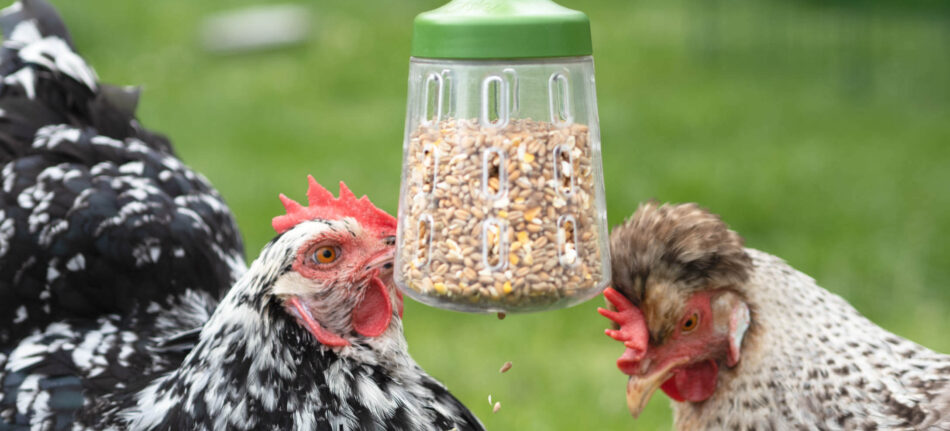
Peck toys: These toys slowly release treats as chickens peck, keeping them entertained and the run tidy.
PoleTree chicken perch: For larger runs, a PoleTree offers perches all the way up to the roof, creating a fun playground.
Hay bales: Toss a bale of hay into the run and watch your chickens forage for bugs and pick it apart.
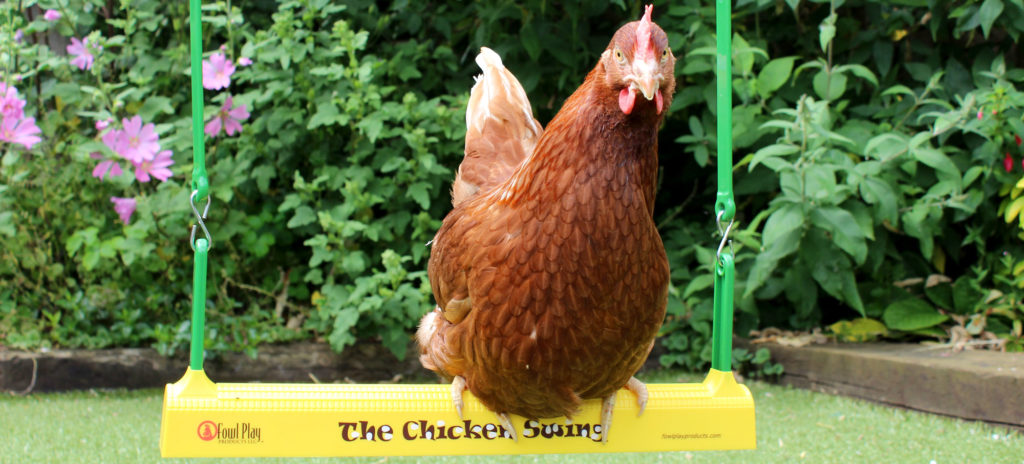
Chicken swing: Give your flock a new perspective and a fun place to perch.
Enrichment not only keeps your chickens busy but also encourages natural behaviors and reduces stress.
How to Weatherproof a Chicken Coop
Protecting your chickens from the elements is essential for their health. Moisture inside the coop can lead to respiratory problems, so choosing a weatherproof coop like an Eglu is important. Wooden coops tend to absorb moisture and can start to leak over time.
To keep your chickens comfortable year-round:
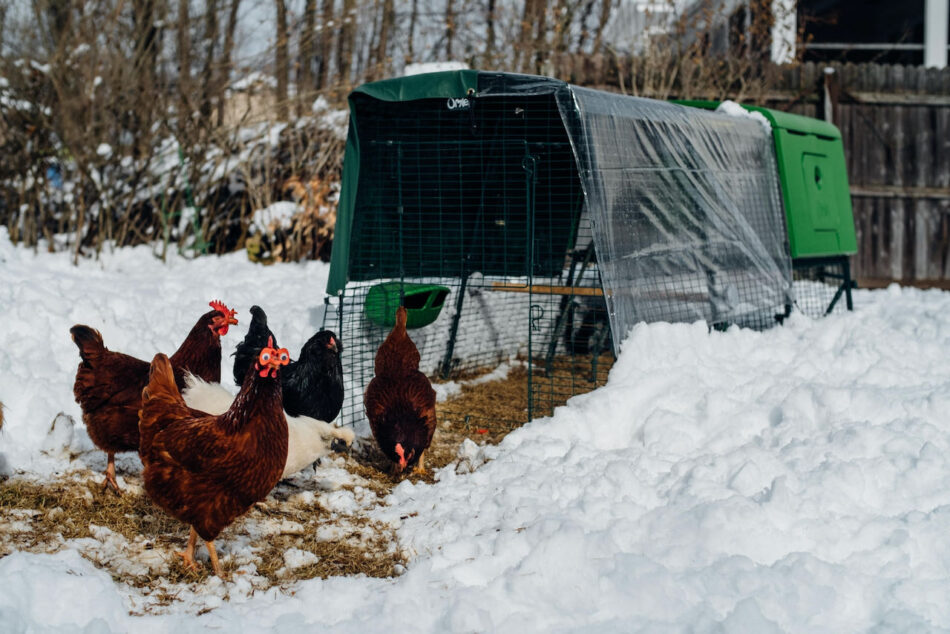
Use run covers to shield your flock from snow, wind, and rain, allowing them to explore outside in any weather.
In spring and summer, provide shade by adding covers over the run to block the sun and keep your chickens cool.
What Chicken Feed Is Best?
Feeding your chickens the right diet is key to their health and egg production. Laying hens need layer pellets, which contain the protein and nutrients they require.
Offer about 120g of pellets per chicken per day.
Use a feeder with a viewing window so you can easily monitor feed levels and ensure your chickens always have access to food.
Chickens are messy eaters so use a no spill chicken feeder to keep your run clean and prevent waste.
Provide poultry grit to aid digestion, as chickens don’t have teeth.
Treats like corn are fine in moderation but are high in fat.
Offer fruit and green veggies sparingly so your chickens don’t fill up on these instead of pellets.
Water is essential. Each chicken should drink about a pint of water daily. Check and refill their waterer regularly. In winter, check for ice several times a day. In summer, make sure the water stays cool, or use an insulated waterer to keep water at the right temperature all year round.
What Is the Best Chicken Bedding?
Choosing the right bedding helps keep your chickens comfortable and healthy.
Dust-extracted pine wood shavings are popular for their absorbency and insulation.
Chopped straw is another comfortable option.
Avoid hay, as it can become moldy.
Avoid cedar shavings, which are toxic to chickens.
Steer clear of sawdust and fine wood dust, which can harm respiratory health.
Add extra bedding in winter to help your flock stay warm.
How Do You Clean a Chicken Coop?
Regular cleaning keeps your chickens healthy and your coop fresh.
Empty out droppings, spot clean the nesting area, and brush off roosting bars at least once a week.
Do a deep clean once a month: scrub and wipe down every surface, and let the coop dry completely before adding fresh bedding. Plastic coops wipe down and dry off much quicker than wooden coops, making them an attractive choice for ease and speed.
Use a natural cleaner like a white vinegar and water solution, or a chicken-safe disinfectant.
Scrub brushes are helpful for loosening stubborn dirt and droppings.
Clean feeders and waterers weekly or each time you refill them. Some waterers can fill with dirt quickly and need cleaning every day. Opt for a stay clean chicken waterer so you don’t have to worry.
Keeping up with cleaning not only benefits your chickens but also makes your chicken-keeping experience more enjoyable.
Use dust-extracted pine wood shavings or chopped straw for bedding.
Stock up on chicken-safe cleaning supplies to keep the coop fresh.
Omlet and Your Flock
At Omlet, we have everything you need to start your chicken-keeping journey, from coops and runs to enrichment toys and cleaning supplies. Our range of accessories will keep your chickens happy and healthy, and we’re here to support you at every stage of your chicken-keeping adventure.
A lot of chicken keepers are worried about their chickens during cold winter days. Chickens are usually well adapted to the cold and as long as their coop is dry on the inside, they feel happy and warm in the Eglu.
Of course there are a few things to look out for and prepare for during the winter, so we have spoken to Stefanie, who is going through her second winter with the chickens in their Eglu Cube this year. She tells us about the preparations and adaptations she makes for when the weather gets icy and how she and her chickens get through the season.
Omlet: How long have you been keeping chickens and how many have you got?
Stefanie: We have been keeping six chickens since February 2018.
Omlet: What is your favourite thing about keeping chickens?
Stefanie: I love that we have our own, freshly laid eggs every morning.
Omlet: You live in an area of Germany that usually gets very cold and snowy in winter. How cold can it get in winter and how much snow do you have at the moment?
Stefanie: We live in Lohberg, in the south of Germany. The temperatures are usually between -5 and -15 degrees centigrade in winter (5f), so it does get very cold here. We currently have around 50cm of snow, which is normal for this time of year.
Omlet: What changes did you make to the Eglu Cube to get it ready for winter?
Omlet: Do you change the daily food and water routine during the winter?
Stefanie: We make sure to feed them more regularly and keep an eye on them to make sure they definitely eat enough. They eat a lot of fresh lettuce, and I like to give them warm food to help them keep warm. Keeping an eye on the water is extremely important as it easily freezes.
Omlet: Do the chickens use the run more or less in the winter than they do the rest of the year and do your chickens like snow?
Stefanie: My chickens don’t like snow at all, so that’s why they mainly keep to the covered areas of their run, where it’s dry.
Omlet: Do your chickens lay eggs in the winter?
Stefanie: Our six girls don’t lay as much as they usually do during other times of the year, but even though we have a lot of snow, we still get around two to three eggs every day.
Omlet: Do you add a light source to your coop?
Stefanie: Yes, we do have a light in the coop as it gets dark very early these days.
Omlet: As chickens love scratching and foraging for food, do you give them some other entertainment when it’s snowy and icy?
Stefanie: Yes, we tend to spread some corn in the covered areas of their run. This keeps them entertained and offers them a chance to scratch naturally.
These are great ideas to keep your chickens happy and healthy during the winter. Have a look at our video of top tips for chicken keeping in winter:
On a cold winter’s day, when there’s a heavy frost or a thick blanket of snow do you ever wonder how your chickens manage without central heating and a mug of cocoa? It’s natural to worry if your hens will be comfortable when the temperature dips below freezing.
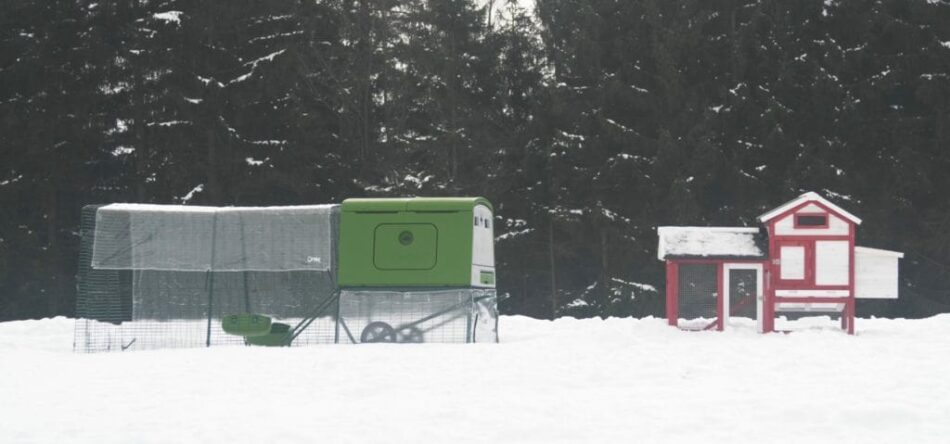
Unsurprisingly, chickens will look for shelter when the weather’s bad so the first thing you can do to keep your chickens cosy is make sure they have a winter proof chicken coop. In this respect choosing the right chicken coop is similar to choosing your own house. You wouldn’t want drafty windows and doors, a leaky roof, and paper thin walls – and neither do your chickens. Many coops that are bought are fine during the summer, but unfortunately when winter comes they can leave their occupants shivering. We set about testing two very different chicken coops over the course of 3 nights in the Bavarian Forest in Germany. A place that gets more than its fair share of snow and ice.
The first chicken coop was typical of the type sold all over the internet. On first impressions everything fits together well and it’s attractively painted, it comes with a roosting bar and a nesting box and a run. It appears that this is a perfectly good chicken coop. However, on closer inspection it’s worrying to find that large sections of the wooden panels are only 5mm thick. There’s no insulation and nothing in the instructions regarding the suitability of the coop for year round use.
The second coop was the Eglu Cube Chicken Coop by Omlet. This chicken coop is part of the Eglu range which all feature a twin walled construction providing an insulating layer all round the coop. Similar to the way ice chests are made, it feels extremely robust and heavy duty. You could say it’s agricultural quality in a hobby chicken coop. It looks the part – but would the Eglu keep the cold out and the warm in?
Identical digital thermometers were placed inside the Eglu and the wooden coop which would take readings both inside and outside the coops during the night. Cameras were also placed inside the coops to record the chickens. After the chickens went to bed the front doors were closed, in fact the Eglu Cube came complete with a rather fancy Automatic Chicken Coop Door which gently closed behind the last chicken.
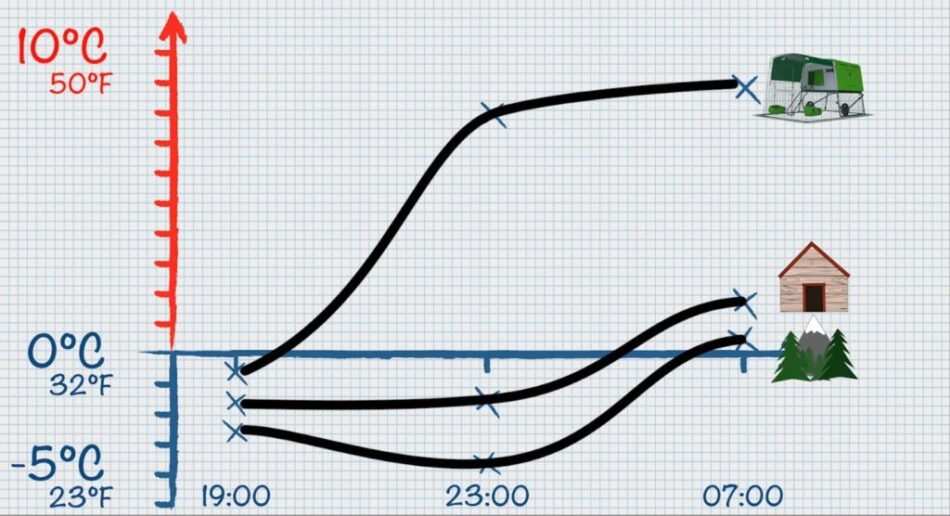
As it got dark the outside temperature dropped to -3.8℃. While it was getting colder outside, it was getting warmer in the Eglu Cube Chicken Coop. Around an hour after the chickens had gone to roost the temperature inside the Eglu Cube was 8.3℃ and it stayed there all night. That’s a plus 12℃ temperature difference.
Unfortunately it was not as cosy in the wooden house. As the temperature outside dropped so too did the temperature inside the wooden coop. At 11pm it was -2℃ inside the coop. That’s only 1℃ warmer than the outside temperature. In fact the inside of the wooden coop stayed below zero for nearly the whole night, warming to just above zero by 7am.
If it was freezing inside you might be wondering how on earth the chickens survived. Chickens, as with all other warm blooded animals, have temperature-regulating mechanisms to keep their body temperature at a constant level (around 41-45℃ in a healthy adult hen), so they can cope with a certain amount of cold. Just like wild birds, chickens will fluff up their feathers when it gets cold; this traps a layer of air which insulates the chickens against the cold. This is why it’s so important that chickens don’t get wet during cold weather, as this prevents them from being able to fluff their feathers up. In addition a drafty coop will make it hard for them to trap this layer of warm air too.
They will also tuck their head under their wings and huddle together with their coop companions to keep themselves warm. On the in coop camera recording you could clearly see how the chickens select a roosting place, and then fluff up their feathers.
So if the chickens in the wooden coop were able to keep themselves warm even though it was freezing inside there’s nothing to worry about? Not quite, a coop that’s not insulated or draughty will place extra demands on your chickens because of the heat being lost. Chickens in a cold coop will have to increase their metabolism to turn food and fat reserves into heat at a faster rate than hens in a cosy coop. If the heat loss is extreme, or a chicken is not fully fit then over the course of several cold nights there is a risk that all the energy reserves are used up resulting in the chicken being unable to keep it’s body temperature high enough with potentially fatal consequences.
What this test shows is that properly insulated, winter ready chicken coop can make all the difference between a cosy night in the coop and one spent shivering to keep warm. As an added bonus hens that use up less energy keeping warm are more likely to keep laying.
Jo Page is a veterinary nurse who also runs the blog My Little Country Lifestyle, where she shares stories from her countryside life in the South West of England. Jo recently upgraded her old wooden chicken coop for an Eglu Go UP, and has written about her first weeks with the new coop:
“As a veterinary nurse I take the welfare of all my animals very seriously. As humans we have bred animals and birds to suit our wants and needs and on occasion this does mean they aren’t able to survive or thrive without human intervention.
The hens are also not ‘only a chicken’ they are birds I have chosen to keep for the benefit of fresh eggs and it is my responsibility to ensure their needs are met.
The Eglu Go UP is worlds away from the make shift house they had when we moved and much more superior to the coop and run at our previous house. Both were predominately made of wood and we have already had to dispose of one chicken house due to a red mite infestation which we could not clear. Red mite bite the chickens at dawn and dusk, can make them anaemic and effect egg production. They thrive in damp woody environments so traditional wooden chicken coops are a breeding haven for them.”
If you live where winter brings a real chill, you’ve probably discovered a frozen egg or two in your chickens’ nesting boxes. It’s definitely not ideal, frozen eggs can crack, spoil, and leave you missing out on the freshest breakfast possible. But don’t worry, with a few easy tricks, you can keep your hens’ eggs safe and delicious all season long. Here’s how to prevent your hens’ eggs from freezing, so you can keep enjoying fresh eggs even when the temperatures drop.
Why do eggs freeze?
Eggs are mostly liquid inside until they’re cooked or on their way to becoming a chick, and just like any other liquid, they have a freezing point. Chicken eggs will start to freeze at around 29℉, and it only takes a couple of hours for them to turn solid. Because a non-broody hen doesn’t hang around to keep her eggs warm, those freshly laid treasures are left at the mercy of the cold. As soon as the temperature drops, eggs in the nesting box can freeze quickly, especially if your coop isn’t super cozy. Even a short cold snap can leave you with cracked, frozen eggs, which is why it’s so important to stay one step ahead of the weather and give your hens’ eggs a little extra protection when the chill sets in.
How can I tell if an egg is frozen?
Frozen eggs can feel heavier than normal, and you might notice they crack, bulge, or even burst from the pressure inside. Sometimes, you’ll collect an egg that isn’t totally frozen yet, crack it open and you might spot a slushy, half-frozen egg white. Partially frozen eggs can feel a little wobbly or off-balance in your hand, and you might even hear a sloshing sound if you give them a gentle shake. Keep an eye out for shells that look a bit strange, feel extra cold, or have a frosty layer on them. Tiny hairline cracks are another giveaway that the cold has gotten to your eggs. If you’re ever unsure, just give the egg a little shake, if it sounds different, chances are it’s been nipped by the frost. Spotting these signs early can help you prevent cracking into an egg that is past its best.
Can I use frozen eggs?
Eggs that have been frozen just aren’t the same as the fresh ones you’re used to. While you can thaw and eat a frozen egg, the texture turns grainy and the taste isn’t nearly as good. Thawed yolks get thick and gelatinous, making them tough to mix and not so great for your favorite recipes.
Any eggs that have cracked or look a little misshapen from the pressure should go straight to the compost, especially if they’ve been frozen. Once the shell cracks, it opens the door for bacteria and other nasties that can make you sick. It’s always safer to toss out frozen or cracked eggs and put your focus into keeping your hens’ eggs from freezing in the first place.
3 ways to prevent eggs from freezing
Insulate your coop
Insulated chicken coops are a game-changer when it comes to keeping your hens cozy and their eggs safe from freezing. Good insulation helps trap your flock’s body heat, so the warmth sticks around instead of escaping into the chilly air. This means your coop stays warmer than the outside, even when winter really sets in. If you’re thinking about adding insulation to your current coop, just make sure you don’t block the ventilation; fresh air is still super important to prevent moisture build up inside and keep your hens healthy. Omlet’sEglu Chicken Coops are designed with twin-wall insulation and draft-free ventilation, so your hens stay comfortable all season long. And if you live somewhere that gets seriously cold or have a small flock, you can addextreme temperature protection for even more peace of mind.
Focus on the nest box
Make your hens’ nesting box as warm and inviting as you can. Thick bedding like straw is perfect for winter, it gives your hens a soft, cozy place to lay and helps keep their eggs insulated from the cold. You can also hang some strips of fleece or another thick fabric as a curtain in front of the nesting area. This simple trick helps block out chilly drafts and keeps the warmth where it belongs.Chicken nesting boxes should always be lifted up off the frozen ground, so if yours are sitting flat, try raising them a bit to keep the cold at bay. The main goal is to keep the nesting area warm enough so your eggs don’t freeze before you can collect them, so don’t hesitate to pile on a little extra bedding or insulation when the temperatures really drop. A snug, draft-free nesting box not only keeps eggs safe, but also encourages your hens to keep laying all winter long, ensuring consistent egg production.
Collect eggs more frequently
During the winter, it’s a good idea to check for eggs a few times a day to keep them from freezing. Whilechicken eggs can usually hang out in the coop for a few days and still be perfectly fine, frozen eggs are best avoided. Most hens lay their eggs mid to late morning or sometimes in the early afternoon, so try to peek into the nesting box after your morning coffee, again after lunch, and at least once more before it gets dark. This way, you’ll scoop up those fresh eggs before the cold has a chance to get to them.
What to avoid when preventing eggs from freezing
There are a few tempting tricks out there for keeping eggs from freezing, but some are best avoided for your hens’ safety and comfort:
Don’t put a heat bulb or plate inside the coop. It can make things too warm, and your hens might go into shock when they step out into the cold.
Avoid sealing up the coop completely. Good airflow is key, without it, moisture builds up, which can lead to respiratory issues and even frostbite on your hens’ combs and wattles.
Skip using blankets or other cloth as nesting box bedding. Hens’ claws can easily get caught in fabric, which can lead to injuries.
Omlet and your eggs
Our range ofEglu Chicken Coops all feature the same expertly designed insulating methods to keep your hens as comfortable as possible in all weather conditions. And, with the addition of anautomatic chicken coop door, you can schedule your chicken coop to close as soon as the sun sets and the temperature cools further even if you’re not home, ensuring their body heat is locked inside sooner. When you choose an ingeniously insulated Omlet chicken coop, you can have confidence that your chickens are comfortable when they roost and lay their eggs.
The cold, frosty temperatures of winter are in full swing, and while you are enjoying a warm cup of tea in the warmth of your kitchen, you might be looking out on your girls wondering how they feel about the colder weather.
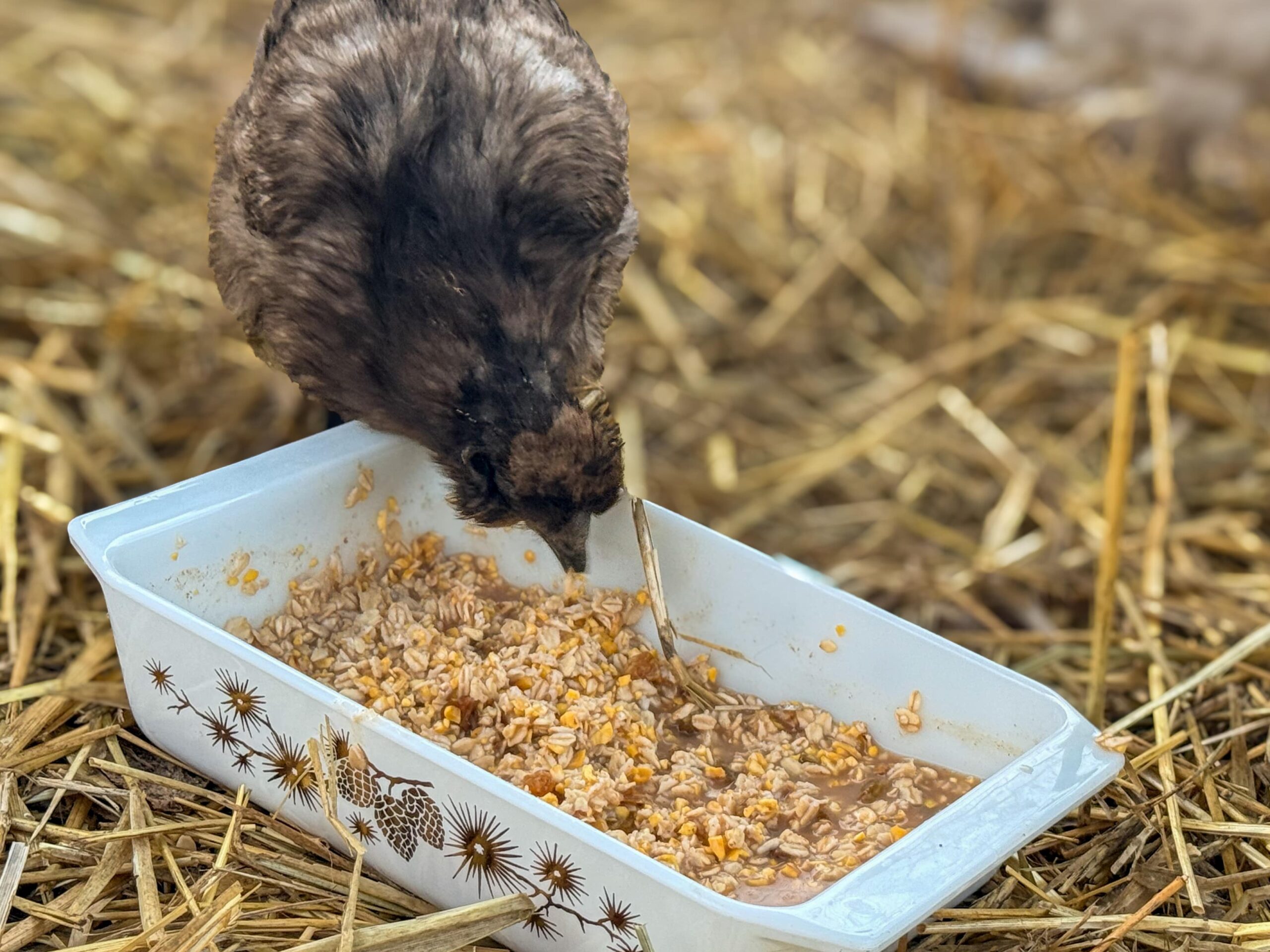
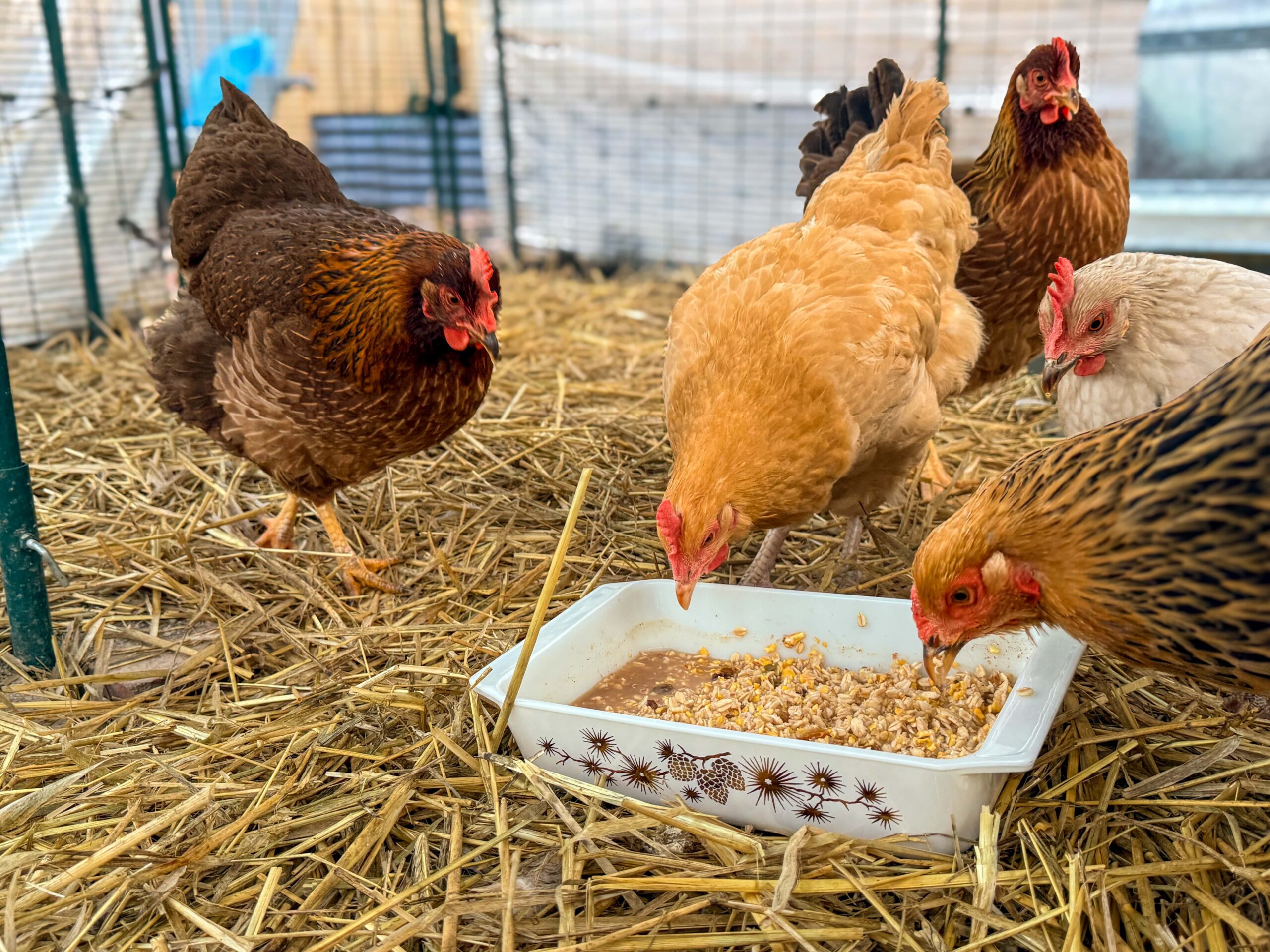
If you’re looking for a new way to keep them warm first thing in the morning, or late afternoon just before they go to roost, consider making this yummy, warm corn recipe, especially for your hens, with a festive flavor which will provide extra nutrients to keep up their health this winter. It’s super simple and quick to make.
Ingredients – for 2-3 chickens
2oz corn
1oz oats
1oz raisins
100ml hot water
Pinch of ginger, cinnamon
Method
Soak the corn, oats and raisins in hot water for 10 minutes, stirring occasionally. Mix in a pinch of ginger and cinnamon for added nutrients for your chickens. Leave to cool slightly before feeding to chickens.
Ginger supports the immune system and provides anti-inflammatory benefits which can be particularly beneficial for a poorly hen. Cinnamon has antibacterial and antioxidant benefits, and can reduce inflammation, these are extremely good for chickens as they are likely to experience respiratory problems.
Insulating your chicken coop and getting your flock ready for winter is vital for their health and happiness. Most chicken breeds cope well in moderately cold temperatures as long as they have a well-insulated, dry coop. Chickens normally acclimatize to the cold weather, so if you have an insulated coop such as an Eglu Chicken Coop, you won’t need to fret during the cold months. In fact, chickens are able to adapt to the cold much better than hot weather! But with a little extra planning and preparation, you can ensure that your flock not only endures the winter, but thrives in it.
Why you should use an insulated chicken coop
Whilst chickens tolerate the cold well, ensuring your chicken coop is insulated during the cold months can promote their health. Whether you live in a state such as Alaska that is cold all year round, or experience warm summers followed by cold winters it’s vital you choose a coop suitable for the weather.
Our range of Eglus are designed with warmth as a core aspect. With a unique double-wall insulation system, you’ll find that our coops work in a similar way to double glazing. Your hens’ body heat is trapped inside whilst ensuring cold air cannot get into the sides of the coop. When comparing Eglus to a traditional wooden coop, you’ll discover that the Eglu provides far more insulation.
The insulation of our chicken coops is not the only benefit they provide. They are easy to assemble, easy to clean, portable and simple to attach to chicken runs. This will allow you to give your flock the space they need to roam during the day, as well as a cozy spot to sleep at night.
How to easily insulate your chicken coop
Whilst our chicken coops are naturally insulated, in really cold temperatures you may wish to insulate their home even more. Our Eglu Extreme Weather Protection are designed to perfectly fit your coop for added insulation. The temperature blankets are filled with a heat trapping recycled material that is breathable whilst keeping your pets warm. They are simple to fit to your Eglu and are easily secured with bunjees.
However, if you do not have an Eglu there are other ways to insulate your coop:
Weather protection & insulation for wooden coops
Your chickens’ coop must be waterproof! Most chicken breeds do well in the cold so long as they are dry. Chicken coops should also be insulated enough to remain warm inside even in the cold of winter. Here are our tips for insulating a chicken coop:
Spray foam insulation – you can hire someone to insulate your chicken coop with spray foam to help trap heat inside your hens’ nest.
Fiberglass insulation – using fiberglass insulation is an easy way to add DIY warmth.
Wool blankets – adding wool blankets to the smalls can help to keep the coop insulated.
Ventilation whilst keeping cozy
A well-ventilated chicken coop will ensure that plenty of fresh air gets inside the coop. This will keep the odors down and avoid moisture build-up. Whilst you want to stop chilly drafts, a chicken coop without ventilation will retain moisture along with heat. And while some air circulation is good, make sure the coop is draft-free.
Elevation to reduce dampness
Height can also be an issue when making sure chicken coops are insulated. Coops should be raised off the ground to prevent the base becoming damp. For larger flocks, the Eglu Cube is an excellent choice for both insulation and elevation. If your coop doesn’t have legs, you can place bricks under the coop to allow air to circulate and reduce dampness. Always make sure you place or build your chicken coop and run-on high ground that won’t flood during heavy rainfall.
Size of the coop
It seems counterintuitive, but chicken coops can actually be too big. When the coop is too big for the size of the flock you have, your chickens won’t create enough body heat to warm up the space. This is why it’s so important to understand how much space your chickens need, when deciding which coop to buy. Chickens huddle together and keep each other warm, so they don’t need much space in their sleeping quarters. Try not to open the door of the coop at night when your chickens are roosting as it can compromise your insulation. Be mindful that this pent-up body heat is keeping them warm, so make coop and egg checks quick! If you have a large coop or barn and just a few chickens, you can place a large cardboard box on its side, half filled with chopped straw or wood shavings in a corner to help them conserve their body heat.
Keeping your chicken run insulated
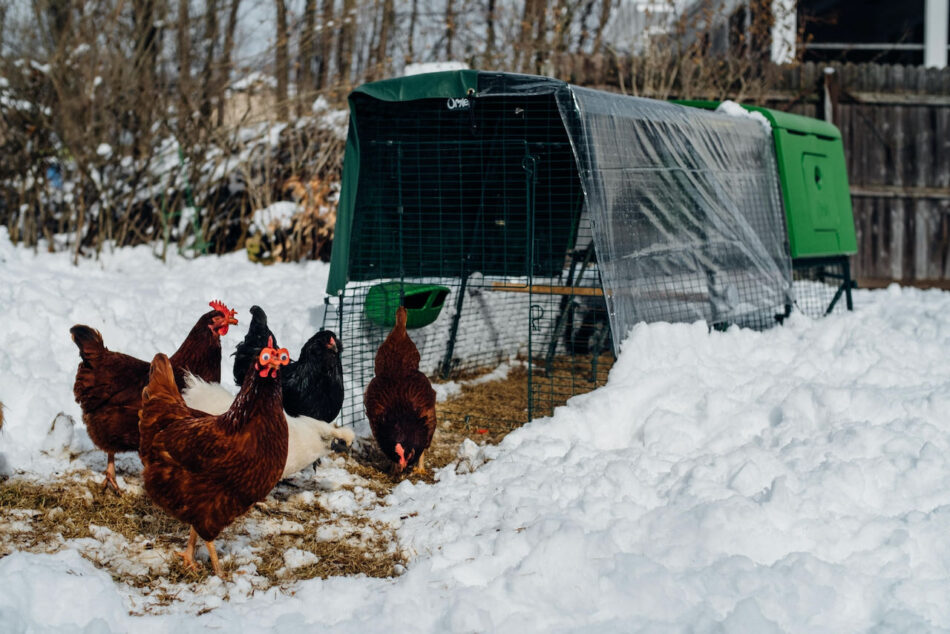
It’s important that at least part of your chicken run is covered during winter months. Using weatherproof chicken run covers will help reduce how much snow can build up inside the run. You can also build a greenhouse-style addition to your coop, covering it with clear plastic, which will help convert sunlight into warmth. To prevent areas under the run from becoming too muddy, cover wet spots with pelleted pine bedding (usually used for horse stalls). Mud is a breeding ground for poultry parasites, so muddy areas should always be addressed.
Perches for cold chickens
Give your chickens plenty of places to roost. To prevent their feet from getting too cold on the frozen ground, you’ll need to give your chickens a place to perch in both their coop and run. The perches need to be wide enough so that the chickens can cover their toes with their feathers to thaw out chilled toes. By placing freestanding chicken perches or wire-mounted chicken perches, you’ll give multiple hens the opportunity to warm their feet while they’re out of the coop.
Cleaning your coop in winter
Keep your chicken coop clean and dry. Clean the droppings from inside the coop daily and replace bedding as necessary. By keeping the coop both dry and clean, you will help to prevent moisture buildup, which can lead to frostbite on your chickens combs and wattles.
It is important your flock always has a source of fresh, unfrozen water. Depending on where you live, this can pose a challenge. To prevent frequent defrosting, you can invest in a heated waterer or heated poultry drinking base. You can also insulate the water like you have your coop, by wrapping the chicken drinkers up in a layer of bubble wrap to keep the water thawed for longer. Don’t place the water inside the coop, as it will increase humidity levels.
Chicken feed in the cold
During winter your chickens feed consumption will be higher than in the spring/summer. Often chickens enjoy warm feed, like cooked lentils or warm oatmeal with some raisins or other small, dried fruits. Give your hens extra corn or scratch inside of a peck toy for both physical and mental stimulation in the afternoon, as this will heat them up internally as they digest it overnight. Offer hay or dried grasses for extra ruffage to fuel their metabolisms. Hens will decrease or even stop laying eggs in the winter to conserve energy. But you can help encourage hens to continue laying by providing adequate feed – both in quality and quantity. Supply layer pellets to give the right nutrients your egg-producers need throughout the winter.
Take care of their combs and wattles
If it gets extremely cold during the winter, your chickens’ combs and wattles can be in danger of getting frostbite. Most hardy breeds have small combs, but if you have chicken breeds with very large, floppy combs you will need to gently rub Vaseline on their combs and wattles. You will also need to keep an eye out for coughing, sneezing, and general symptoms of being unwell.
Vermin
Remember at this time of year, there are hungry rats and mice attracted to the chickens feed and water. Take extra care with the storage of your feeds. Store feed away from the coop and keep it in an airtight container. If you notice any signs of vermin, remove the feeders and drinkers at night, when they are most active. Offer kitchen scraps or fresh vegetables in a Caddi Treat Holder to keep the floor of your flock’s run free of tempting treats for unwanted visitors.
Fighting winter boredom
With less grass and weeds to munch and fewer bugs to feast on, your chickens will experience boredom in the winter. This can lead to behavioral issues, like feather pecking, egg-eating etc. Prevent boredom by giving your chickens toys like Chicken Swings, perches, piles of leaves, mirrors, or even a xylophone mounted to the run! Keeping your chickens hentertained will ensure they’re mentally stimulated and kept busy.
Introducing Omlet Petcare
Whether you’re a keen chicken keeper, or have a whole pack of pets, we’re here to help you take care of them. From chicken pens to roam in, to comfy dog beds your pooch will adore.
A familiar problem for both backyard chicken keepers and commercial farms lies in how to prevent and treat red mite infestations. Compared to other poultry parasites such as fowl ticks, lice and flies – mites are by far the most common, destructive and difficult to remove. So why are these pests dreaded by chicken keepers? Learn more about these parasites and how to keep your flock protected.
WHAT ARE RED MITES?
Red mites, also known as Dermanyssus gallinae, are nocturnal parasites that hide themselves in gaps and cracks during the day, laying wait to wreak havoc on your flock at night. In fact, their feeding schedule is the main distinction between them and their cousins, the northern fowl mite. Red mites will only be seen on chickens at night, while other mites will be present on hens throughout the day. This makes them particularly tricky to catch in the act. And, at about 1mm in size, they’re very hard to see.
These mites earn the title of “red” because they turn from gray to crimson after they have had a blood meal. Red mites are most active during the warmer months, preferring a temperature range of 77-95°F. Their reproductive cycle is relatively short, with an adult hatching and maturing from an egg in as little as one week. Once an infestation takes hold, red mites can torment your hens indefinitely, and even survive for up to 10 months without feeding.
PREVENTING RED MITES
An ounce of prevention is worth a pound of cure. But, when it comes to red mites, that can be easier said than done. Wild birds or new chickens can transmit red mites to your flock, which is why it’s important to check your chickens’ health regularly to make sure all flock members are feeling their best.
Change bedding frequently — at least once a week — to help prevent red mites. It’s also a good idea to check for red mites each time you clean your chicken coop. All types of chicken coops can get red mites, but wooden coops tend to experience the most frequent and severe infestations.
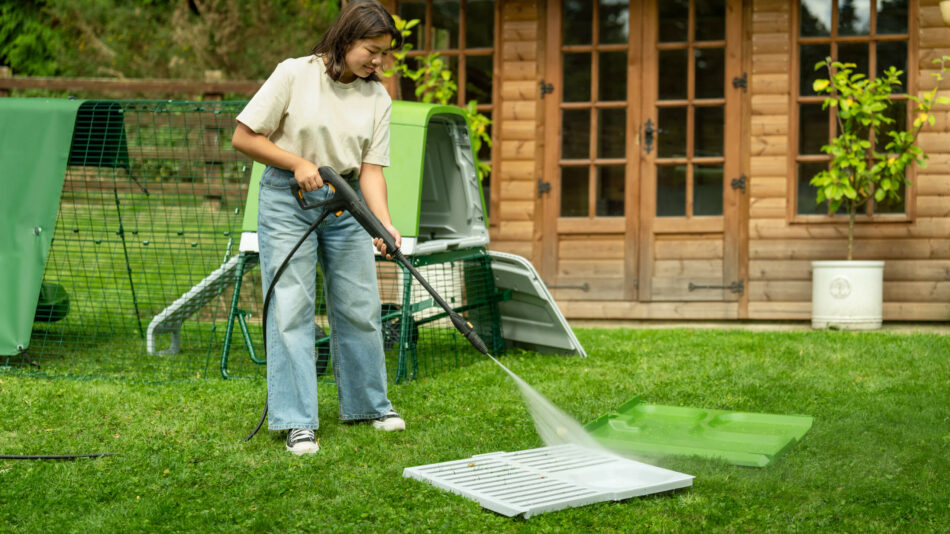
Choosing your housing carefully can help prevent red mites before they take hold. Omlet’s Eglu chicken coops are made from smooth plastic, which eliminates hiding places for mites. And in the event that there are red mites present, Eglu coops are quick and easy to clean. A quick blast with a pressure washer will be enough to send the mites packing.
SIGNS AND DIAGNOSIS
Red mites may be present, but may not be in populations high enough to cause symptoms. Once the infestation becomes significant, anemia will occur, your hens won’t be the picture of chicken health. Their wattles and the combs will appear pale and their egg production will drop significantly. Red mites also cause:
Skin irritation
Feather pecking
Weight loss
Restlessness in the flock
Your chickens will also probably be reluctant to go into their coop at night because that’s where the mites are lying in wait.
When checking your chicken coop for red mites, be sure to also check their perches or other chicken coop and run accessories. An easy way to check for red mites is by rubbing a white paper towel underneath the perches at night. If there are red mites, they will be on the underside of the perch after feeding on your chickens – you’ll see red streaks on your paper towel after coming into contact with them.
6 WAYS TO TREAT RED MITES
1. CLEANING
If you find red mites in the coop, it’s time for a deep clean. This type of cleaning will take several hours with a wooden chicken coop, but significantly less time with a plastic chicken coop. Remove all hens from the coop and strip it down as much as possible. Clean each part individually and allow for the coop and parts to dry completely.
2. TREAT THE COOP
Mix a chicken-safe insecticide* that is effective against mites with water using the manufacturer’s or your veterinarian’s guidelines. Apply directly to the coop, ensuring you get it in the cracks and crevices. Concentrate your efforts where there is the highest population of red mites. Leave for 15-20 minutes.
3. HIGH-PRESSURE HOSE
Use a hose (preferably a pressure washer) to hose down the coop and the parts. Try to get in every nook and cranny, as this is where the mites like to hide. Leave for 10-15 minutes to dry. After this, you will most probably see more agitated mites crawling out. Repeat this process until there are very few mites emerging after each wash. If you have an Eglu chicken coop, one pressure wash will be enough to eradicate any existing mite population.
4. UV
Leave the coop to thoroughly dry. It’s ideal to perform coop cleanings on a sunny day where UV rays can help dry the coop and kill remaining mites. Put the coop back together and add bedding. Dispose of the old bedding in a plastic bag in the garbage – red mites will happily find somewhere else to live if given the opportunity.
5. TREAT YOUR CHICKENS
Your chickens will need to be treated in order to break the red mite feeding and reproductive cycle. Many coop treatments can be applied directly to the flock as well, but it’s always a good idea to talk with your veterinarian before applying anything to your chickens. Diatomaceous earth (DE) is commonly seen as a home remedy for red mites, but is often not effective against an active infestation, and can be very irritating to your hens’ (and your) airway if inhaled. Always apply products according to their labeling, and for the full duration of treatment.
*Note: pesticides that are effective against red mites vary by location and have differing levels of efficacy due to building resistance. Contact your chickens’ veterinarian to obtain information for the best red mite treatment for your area.
PREVENTING RED MITES WITH OMLET
Any chicken coop can fall victim to red mites, but with an easy-to-clean plastic chicken coop, you’ll be able to nip infestations in the bud. Our chicken perches can be removed easily for a thorough cleaning, and our plastic Chicken Swing offers a mite-resistant place to find relief. Don’t fall prey to red mites – take control with Omlet’s chicken products.
Who enjoys being bored? The same boredom that plagues humans and other pets can creep into your chicken flock – potentially causing destructive behavior. Thankfully, there are ways to keep your chickens entertained. We’ll share our favorite ways to keep your flock’s minds and bodies busy to effectively keep boredom at bay.
Why do chickens need to be entertained?
Much like children, chickens can act out if they become bored. It’s not uncommon for bored hens to display a variety of negative behaviors or attitudes when they don’t receive enough mental or physical stimulation. Some signs that your chickens may be bored include:
Feather pulling (on themselves or picking at flockmates)
Sudden assertive or aggressive behavior
Dull demeanor
Decreased appetite
Chickens are very social animals, and while having companions helps curb their craving to be entertained, supplemental activities will help keep your flock fit and happy.
Ways to keep your flock occupied
Keeping your chickens entertained in any season is easier than you may think. Simple additions to your chickens’ run can make the difference between doldrums and delight. The following boredom-busting activities are great for any sized flock to get a great mental and physical workout in.
Provide perches
Chicken perches are an easy, yet effective way to get your flock engaged in their run. Perching is a natural behavior for nearly every species of bird, and your hens are likely craving some vertical variety in their space. Freestanding chicken perches are quick to install and move when needed and can be customized to accommodate even the smallest hen in your flock. Or, go big with a PoleTree customizable chicken perch for the ultimate perching and play experience.
Put out heaps of leaves, straw or hay
Sometimes you need not look any further than nature for inspiration for enrichment. Freshly raked piles of leaves or scattered piles of straw or hay are great ways to encourage foraging in your flock. Toss some scratch grains or dried insect treats into the piles and watch your hens scratch around for hours searching for their snacks.
Designate a dust bathing area
Dust baths for chickens aren’t just to keep their feathers in good condition but are also a social activity among hen pals. You’ll often notice two or three hens taking a dust bath together. Providing your flock with a dust bathing area in a specific area of their run will help create a communal spot to hang out and catch up on coop gossip.
Put up a mirror
Chickens take pride in their appearance, and will appreciate the opportunity to check out their reflection. Take care that any mirrors are securely mounted, and are not in an area that will reflect concentrated sun rays onto flammable surfaces like straw, hay, leaves, or dry grass. Use a mirror with caution if you have a rooster in your flock. If they perceive another rooster encroaching on their hens they will go on the defensive – even if it’s against their own reflection. This could stress them (and the rest of your flock) and do more harm than good.
Chicken toys
Chicken toys are helpful to motivate hens to exercise mentally and physically. Elevate your hens’ snacktime with peck toys. The Pendant Peck Toy swings and sways along with your chickens’ efforts, which stimulates both their minds and bodies. Or, choose the Poppy Peck Toy for a more stationary option. The Caddi Chicken Treat Holder lets you serve your flock’s favorite fresh finds in a creative way. Stuff it full of leafy greens, hay, or
Other toys for chickens include the Chicken Swing, which provides a fun alternative to an ordinary perch. Many chickens enjoy a nice sit on a gently swaying swing – especially when there’s a nice breeze. Some other toy ideas include:
Xylophones mounted to the side of the run
Toy balls (large enough to not be choked on)
Hollow dog toys to fill with scratch grains or other treats
Change things up
Chicken tractors are perfect for changing things up for your flock. Chickens thrive on routine, but benefit from variety. Move your chickens’ coop to different areas of your yard to give them fresh pecking grounds, new scenery, and different sunning angles.
If you have a stationary chicken coop, try moving some toys or perches around periodically to spice things up. Adjust perch heights, move peck toys to new spots, or add herbs to their dust baths to give your hens variety in their everyday routines.
Spend time with them
This activity doesn’t require any special equipment – just your time. Even if your chickens just view you as the bringer of food, having you in their run for an extended visit helps liven things up. Bring a chair or stool to sit with your flock, or offer some treats by hand to build a bond with hesitant hens. As any chicken keeper knows, time spent with your hens is time well spent.
Omlet: providing your flock with fun
At Omlet, there’s no shortage of fun or innovation. The result? Imaginative chicken toys and accessories that are anything but dull. From pillar pieces like strong chicken coops, to quirky components like the Chicken Swing, our products help you create the perfect hen habitat.
We have recently started working with the show Coop Dreams, providing them with a new setup of coops and runs for their farm. If you haven’t caught any of the episodes before we highly recommend that you check them out. Great source of knowledge if you’re thinking about keeping chickens and they also demonstrate problems and hurdles they come across in a funny and light hearted way, link is here.
In the meantime, we wanted to find out a bit more about where it all started and so Brad, the founder of Coop Dreams, has taken the time to explain to us, where and how this all began!
Soooooo… We are often asked when and how the TV show Coop Dreams started and that’s a tough question to answer because it has its initial roots way back in 1999 but really blossomed in 2014.
In 1999 I was fortunate to be asked to serve as the national spokesperson for the charity ‘Keep America Beautiful’ and speaking about conservation, recycling and reducing carbon footprints on a daily basis… That set the wheels in motion of recognizing the impact of the way we were living. Lots of changes happened over the next decade but fast forward to 2014 when we bought some land and actually began our homestead.
Not having a solid knowledge of homesteading we started searching for videos, books and blogs to help us learn… Admittedly I am NOT a ‘reader’ (Jackster is) and I do not process information well in that arena… So I began looking for videos and everything I saw had perfectly manicured lawns and flowers and incredible landscaping… Well that was pretty un-relateable and so we created a video series that would document our start for others… Showing the successes as well as the failures so people can connect… One thing led to another and pretty soon we were talking to the Discovery network about making it into a TV show… And here we are in the early parts of shooting season 4.
With that we have moved from the city to a 32 acre farm and built a barn and a small house. It has kind of exploded over these 4 years as we now have 3 dogs (2 rescues), 2 cats (That have walked out of the woods and adopted us), 3 horses, 4 goats and 36 chickens… Plus all of the deer, raccoons, foxes and other critters we share the land with.
Homesteading with Coop Dreams – If I was pressed as to why we do this and what we enjoy about it I think it would be the ‘honesty’ of it all. There is something very pure about raising your own food and caring for animals. Additionally there are no games with the animals we share our farm with. We love them and as long as we scratch backs and bring food – they love us. It is pure, honest and very comforting… I do not think I could go back to a life before this farm.
It doesn’t come without its challenges as with almost 50 animals we have to care for, someone is always sick or hurt… Something always need to be fixed or repaired… and there are NO days off. Additionally it is tough to lose an animal, painful to see any suffer and stressful to know when any are not ‘right’.
The other challenges come from being a part of the TV show. In being a true reality show we do not hide, script or cover anything up so our mistakes are out in the open for viewers and followers to judge, criticize and correct. We are grateful that the Coop Dreams community, which continues to grow, has been very understanding and helpful in both our challenging and tough times. I really think it is because it is so easy to see yourselves in us… We are not tv people, we are not perfect and we are certainly not experts… We are just a family that cares about their animals and are trying to live in a more compatible way with the environment.
We recently got the chance to speak with Frau Dr. Sewerin, a German Vet who specialises in poultry. We asked her what her top tips were for keeping your hens happy in colder conditions, here’s what she had to say:
“Make sure the water does not freeze. To do this, place a thick, well-insulated bowl of warm water in a sheltered place, change the water on regular basis or get a water heater.
You should also make sure that there is a dry, snow-free place in the run. You can regularly mix leaves with some wheat grains so that the animals have something to pick. A dry corner with sandbathing possibility must not be missing. Different perching options should always be available during the day anyway, but especially in winter: this helps keeping their feet warm!
Depending on the circumstances, a windcover should be installed at chicken height so that the animals are somewhat protected. You can easily turn the Eglu run into a sheltered, snow-free area. There is are a range of weather protection covers available at Omlet or you could use simple greenhouse film, combined with bubble wrap. This way the run will be a few degrees warmer and windproof on the inside.
In order to help the chickens saving energy and make it a little bit more comfortable for them, you can get an extreme weather jacket for Eglu coops or use tinfoil as it can be found in emergency blankets. The dropping tray can be additionally insulated with an extra thick layer of straw or newspaper. But after all the easiest way is to use the Omlet extreme weather jackets which makes sure that there’s still a good insulation on the inside of the coop.
Pay special attention to the inside of the coop, because the exhalations of the excretions will otherwise accumulate quickly in the interior and irritate the respiratory tract. Good ventilation is also important to remove the humidity, so that the animals do not catch a cold.
A few extra vitamins in the form of fruits, vegetables and herbs can help the immune system. Also onions, garlic and leeks shredded with vegetables or mixed with “flavor enhancers” such as oatmeal, grated carrots, yogurt and oil are very popular.
Now is the ideal time to do a worming cure. If chickens are heavily infested with worms, it weakens them very much.”
If you’re thinking of upgrading your coop, now is the best time to do so. Here are some of the top benefits of having an Eglu plastic chicken coop vs a wooden one, particularly in winter:
They don’t rot and don’t require painting with varnish or wood stains (also means that you don’t have to move pets out whilst you are waiting for the fumes to go.)
They have insulation built in so remain warm.
They have draft free ventilation so your pets wont get a nasty chilly breeze coming in.
The door locks are made from heavy duty steel and wont break even in the freezing weather.
The door handles are all made from plastic so your fingers won’t freeze to them.
The door handles are nice and big so you can use them with gloves on.
The water container is really quick to lift out so you can take it in at night to prevent it from freezing.
She’s got the keys and it looks as though Mrs Barbara is ready to move in… 1 more sleep until we can reveal Mr and Mrs Barbara’s new home. Who’s eggcited?! #MovingDay
Mr Barbara has followed the chickies and has managed to send us a clearer image of where they’re headed, he sounds very excited about it and can’t wait for you to see it.
“I can see clearly now”…..well not quite but almost there! Hang on, only 3 more days until the big reveal….
It appears as though our little chickies have seen something intriguing….can you work out what it is? Their camera can’t quite pick out the details from this far away but we hope to bring you some clearer images as they get closer over the next few days.
By clicking "Accept All", you agree to the storing of cookies on your device to enhance site navigation, analyze site usage, and assist in our marketing efforts.
Privacy Preference Centre
When you visit any website, it may store or retrieve information on your browser, mostly in the form of cookies. This information might be about you, your preferences or your device and is mostly used to make the site work as you expect it to. The information does not usually directly identify you, but it can give you a more personalized web experience. Because we respect your right to privacy, you can choose not to allow some types of cookies. Click on the different category headings to find out more and change our default settings. However, blocking some types of cookies may impact your experience of the site and the services we are able to offer.
Manage Consent Preferences
Always Active
These cookies are necessary for the website to function and cannot be switched off in our systems. They are usually only set in response to actions made by you which amount to a request for services, such as setting your privacy preferences, logging in or filling in forms. You can set your browser to block or alert you about these cookies, but some parts of the site will not then work. These cookies do not store any personally identifiable information.
These cookies allow us to count visits and traffic sources so we can measure and improve the performance of our site. They help us to know which pages are the most and least popular and see how visitors move around the site. All information these cookies collect is aggregated and therefore anonymous. If you do not allow these cookies we will not know when you have visited our site, and will not be able to monitor its performance.
These cookies enable the website to provide enhanced functionality and personalisation. They may be set by us or by third party providers whose services we have added to our pages. If you do not allow these cookies then some or all of these services may not function properly.
These cookies may be set through our site by our advertising partners. They may be used by those companies to build a profile of your interests and show you relevant adverts on other sites. They do not store directly personal information, but are based on uniquely identifying your browser and internet device. If you do not allow these cookies, you will experience less targeted advertising.
 FREE shipping on orders over $100
  10% off your first order
  180-day guarantee
  On average backyard chickens live to an age of six to eight years, but there are of course exceptions. How old a chicken will become depends amongst other things on the breed and how a chicken is kept. Heavy layers exhaust themselves with a lifespan of just three years, others can live up to ten years. According to the Guinness World Records world’s oldest chicken is Matilda, a Red Pyle hen from Alabama that died at the age of sixteen (1990-2006). A hen is considered a senior around the age of five. If you are not sure about the age of a chicken, there are signs that will tell you your hen is getting older.