 FREE shipping on orders over $100
  10% off your first order
  180-day guarantee
 How to Raise Chickens as a Beginner Chicken Keeper
You may not find a class on how to raise chickens at your local college – which is why we’re here to help you get started on your chicken-raising journey. Lots of information about chicken care for beginners can be found online, but it can all be a bit overwhelming. The surest way to succeed is to stick to the basics, opt for a high-quality, long-lasting set up, and to keep things simple. Omlet has the knowledge and the products to help you succeed when getting chickens for the first time.
Reasons to start raising chickens
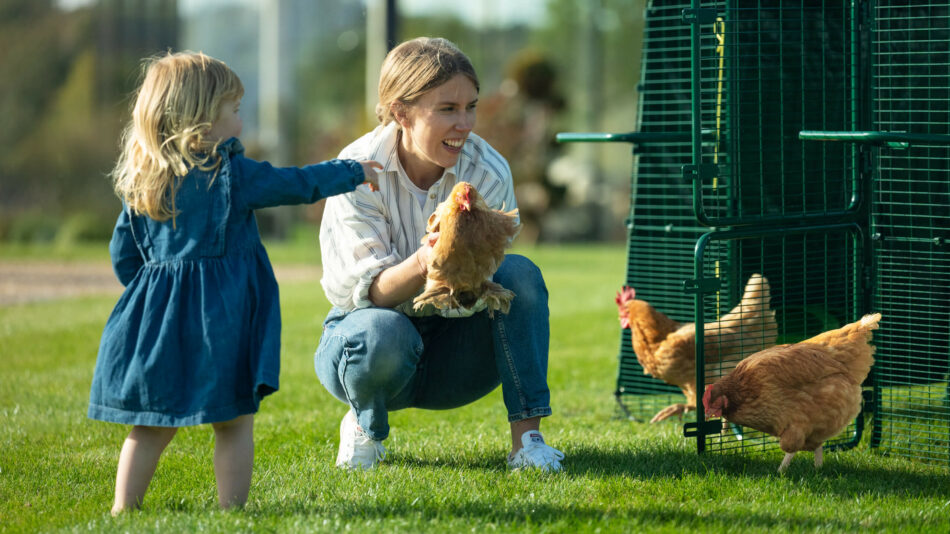
If you’re new to poultry, getting chickens for the first time can seem daunting. Hens are often viewed as farm-specific animals whose main purpose is to lay eggs. But chickens actually make wonderful backyard pets that are full of personality and character.
There are so many benefits of raising chickens. These include, but are not limited to:
- Fresh eggs supplied daily
- An exciting hobby that gets you outdoors
- Garden and composting assistance from your flock
- A family-friendly activity that will teach valuable life skills and lessons
- Mental health benefits by reducing stress and easing anxiety
Flocks can be raised in urban or rural settings, and don’t require much space. Don’t let where you live stop you from keeping hens of your own.
Preparing for your new chickens
Getting chickens for the first time is an exciting and joyous occasion so long as proper preparations are made. There are a few things to consider before bringing home new chickens like:
- How much time you have to devote to their care
- Space requirements for your desired flock size
- Other family pets that may pose a risk to your hens
- Zoning laws and city ordinances if applicable
- Selecting your chicken coop and run
Chickens don’t require as much hands-on care as other pets do, but will still need to be looked after daily. Make sure you have adequate space for the number of chickens you want to keep – giving them as much space as possible. Secure your chickens’ area to prevent other pets or predators from reaching them.
The best beginner chicken breeds
It’s a good idea to research and decide which breeds of chickens you want to keep before bringing any hens home. Different breeds have different qualities and temperaments, but here are some that are known for being great hens for first-time chicken keepers:
- Rhode Island Red
- Plymouth Rock
- Orpington
- Marans
- Cochin
- Brahma
- Silkie
- Bantams (miniature versions of certain breeds)
Consider your climate, available space, and egg-laying expectations when selecting which breeds you want to keep. Keeping a “mixed flock” is common among chicken keepers, as it adds variety to your egg basket. You may also find “barnyard mix” hens, which are a mixture of several different breeds. These hens are often bred to be excellent egg layers, be cold or heat-hardy, or to have a specific ornamental appearance.
If you’re getting full-grown chickens, select your hens based on temperament and appearance. As with other pets, hens have unique personalities and some may be more in sync with your own personality.

Getting started with chicks vs mature hens
If you want to start your flock from baby chicks, it’s best to familiarize yourself with the breeds you want to keep. Once you’ve decided on which breeds you want, you’ll need to know where to find and buy your chicks. Common options include local feed stores, breeders, or even online hatcheries, like Meyer Hatchery, Murray McMurray Hatchery, or Cackle Hatchery. No matter where you purchase your chicks from, be sure they are reputable establishments or breeders for the types of chicks you’ve chosen.
There are a lot of factors to consider when deciding whether to raise your flock from newly-hatched chicks, or to start out with established hens. Baby chicks require more time and resources for the first several weeks of their lives. But, raising your chickens from the start can offer several benefits as well.
Raising chicks for beginners
Raising chicks can be a very rewarding experience for any flock-keeper – beginner or experienced. Chicks grow fairly quickly, but do require extra care and equipment until they’re old enough to be more self-sufficient. To raise baby chicks, you’ll need:
- A secure brooder pen
- A heat lamp or brooder plate
- Chick-specific feeders and waterers
- Chick-feed and grit
With each new stage of raising chicks comes different necessities. Newly hatched chicks will need a special enclosure called a “brooder” for the first several weeks of life. A brooder should be predator-resistant and kept somewhere out of the elements. Garages or barns are ideal places to keep brooder pens. Baby chicks will also need a heat source (which mother hens would ordinarily provide) that is adjusted weekly to help them adjust to life outside. You can expect to house and care for your chicks in their brooder until they are around 12 weeks old.
One of the greatest benefits of raising chicks is being able to handle them from a young age. Handling your chicks daily will help to make them more docile as adult hens. After a short while of being handled and housed in the brooder, your chicks will be ready to be moved to their permanent home.
Best chicken coops for beginners
Aside from the chickens themselves, a chicken coop is the most important aspect of keeping chickens. And, as a beginner, you’ll want a coop that works with you, not against you. For example, DIY chicken coop plans may look appealing, but they often lack fundamental provisions for your flock. It’s important to have a safe, easy-to-clean, comfortable coop for your hens to support their health and well-being.
The process of choosing your chicken coop can be simplified by following these suggestions:
- Decide if you want your coop in a permanent location, or want the freedom of a mobile chicken coop (also known as a chicken tractor).
- Think of your yard’s space, and how large of a flock you intend to keep. If you want to keep more than four hens, you’ll need a large chicken coop.
- Determine how much time you want to dedicate to cleaning and maintaining your chicken coop and run. It’s important to remember that wooden chicken coops all require routine maintenance, updating, and take several hours to clean thoroughly.
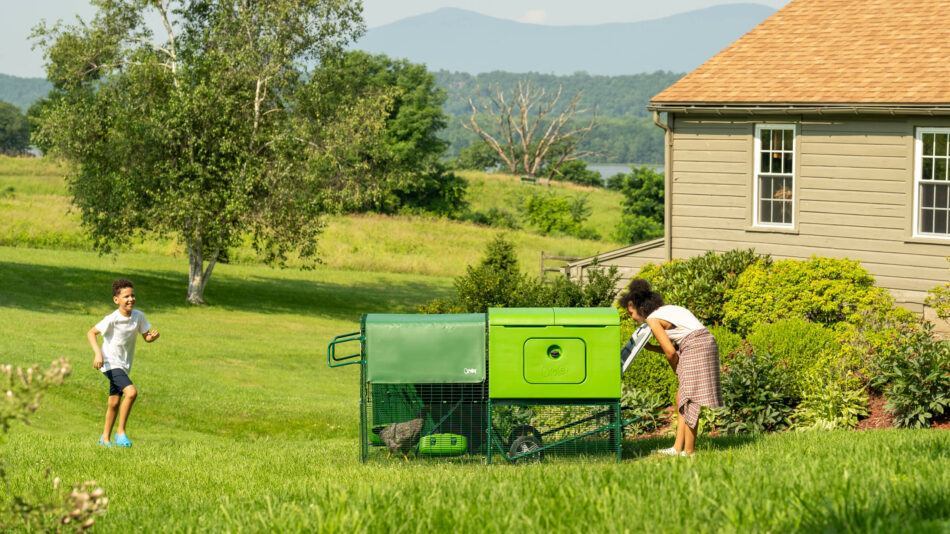
Plastic chicken coops don’t rot, peel, or succumb to the elements – so they require zero maintenance. Omlet chicken coops are also incredibly easy to clean: simply remove the droppings tray and roosting rack, dump the bedding, spray or wipe clean, add fresh bedding, and place the components back in the coop. Our coops take all of the guesswork out of chicken care for beginners, and allow you to spend more time enjoying your flock, and less time cleaning and maintaining their coop.
How much space does a chicken need?
Chickens crave space – and lots of it. Chickens are much happier when allowed as much space as possible to explore. Chicken runs give your flock a safe space outside of their coop to peck at grass and insects, stretch their legs and wings, and soak in fresh air and sunshine.
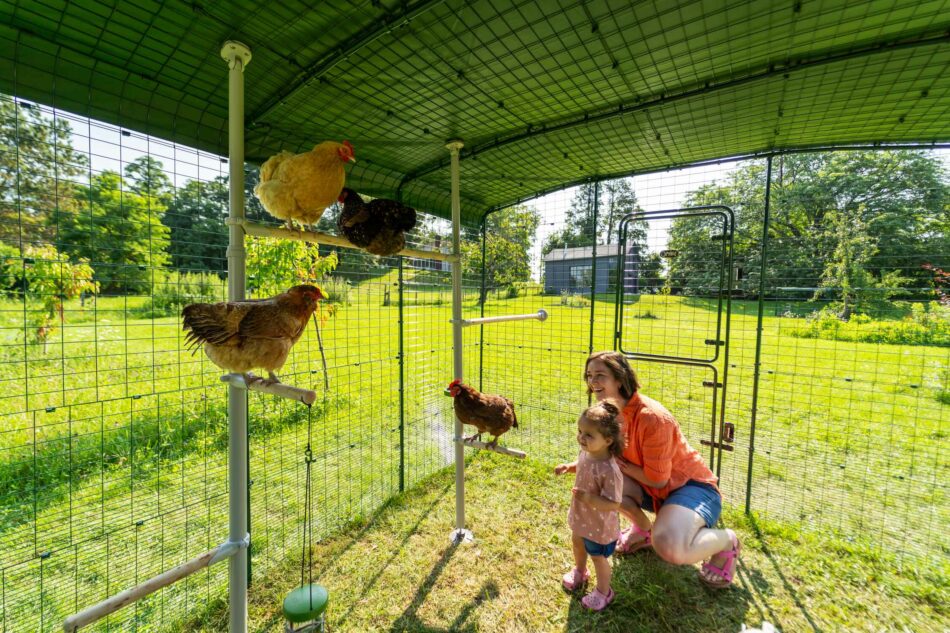
A great option for first-time chicken owners is a walk in chicken run. These runs not only give your hens more aerial space for chicken perches, but also allow you to easily spend time with your flock. Our chicken coop attached runs can be easily integrated with a walk in run, or you can simply place your chickens’ coop right inside of the walk in run.
We’ve also made it possible to extend your walk in run as your flock grows. Both the length and width can be extended at any time, giving your hens maximum space. You can also add walk in chicken run partitions to create different areas of your walk in run. This is helpful for keeping hens separated if needed or when introducing new flock members.
If free-ranging is more in line with your lifestyle, consider chicken fencing to keep your hens close to home. Chicken fencing can be used to prevent your flock from getting into flower beds, wandering off of your property, and straying too far from home. Configure a pen of any shape with posts that can be repositioned at any time, or anchor the fence to a structure with a wall mount. An easy-access gate allows you to enter and spend time with your hens while they explore their surroundings.
How much to feed a chicken per day?
Each chicken needs just over 4oz (about 120g) of quality feed per day to stay healthy, happy, and laying their best. Chickens are fairly self-sufficient and prefer their feed to be left out during the day so they can snack as needed. To keep your flock fed, simply keep their chicken feeders full of quality feed.
What type of feed should I give my chickens?
If your hens are laying age (16 weeks or older), they’ll need to be fed laying pellets or crumble. Both varieties offer the same nutrients, so it comes down to what your flock prefers. Some hens, especially smaller breeds or older chicks transitioning from chick crumble, may do better with crumble, but either option will keep your hens healthy and productive.
How can I keep feeding time clean and easy?
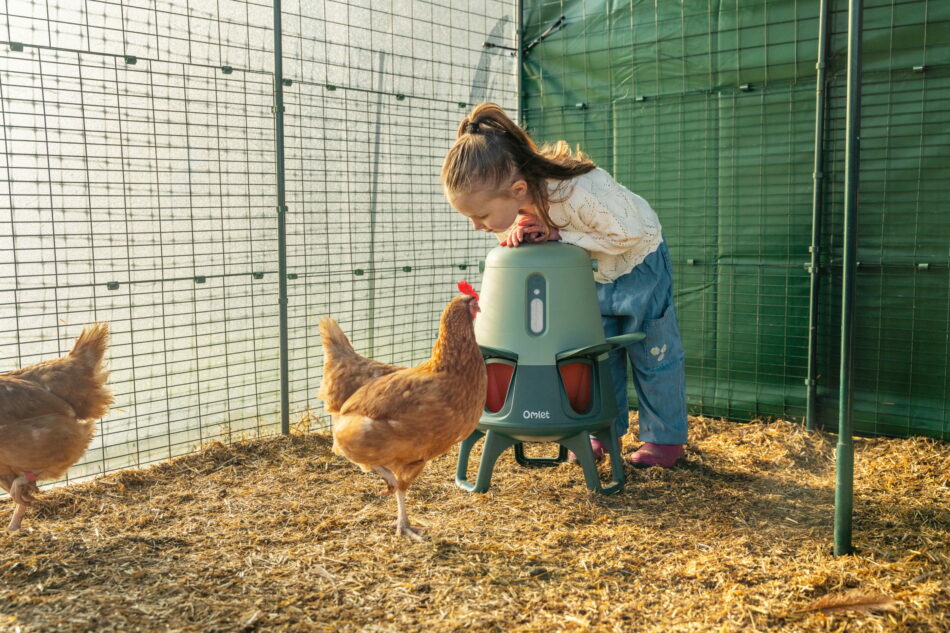
Chickens can make quite a mess of their feed, which can attract pests to your chicken run unless you clean up and bring the feeder in every night. To save yourself time and keep things tidy, consider investing in a feeder like the Omlet Smart No Waste Chicken Feeder. Its clever no-spill design keeps your run pristine, and the automatic daylight sensor closes the feeder at night so you never have to bring it in away from twilight pests. It holds enough feed for six hens for a whole week and even sends refill alerts to your phone, so you’re always one step ahead. Try offering treats in a Caddi Chicken Treat Holder or a Chicken Peck Toy to keep your flock entertained while keeping food off the ground and your run clean.
How much water does a chicken drink per day?
A healthy chicken drinks about half a pint (around 500ml) of water each day, but this can double in hot weather or if your hens are laying eggs regularly. Just like you, chickens thrive when they have constant access to fresh, clean water – so keeping their drink topped up is one of the most important factors to ensure happy, productive hens.
How long can a chicken go without water?
Chickens can’t go long without water – just 24 hours without fresh water can seriously impact their health and egg-laying. In hot weather, they can become dehydrated even faster. That’s why it’s so important to make sure your flock always has access to clean, cool water. A reliable waterer takes the guesswork out of hydration and keeps your chickens happy, healthy, and laying their best.
What is the best chicken waterer?
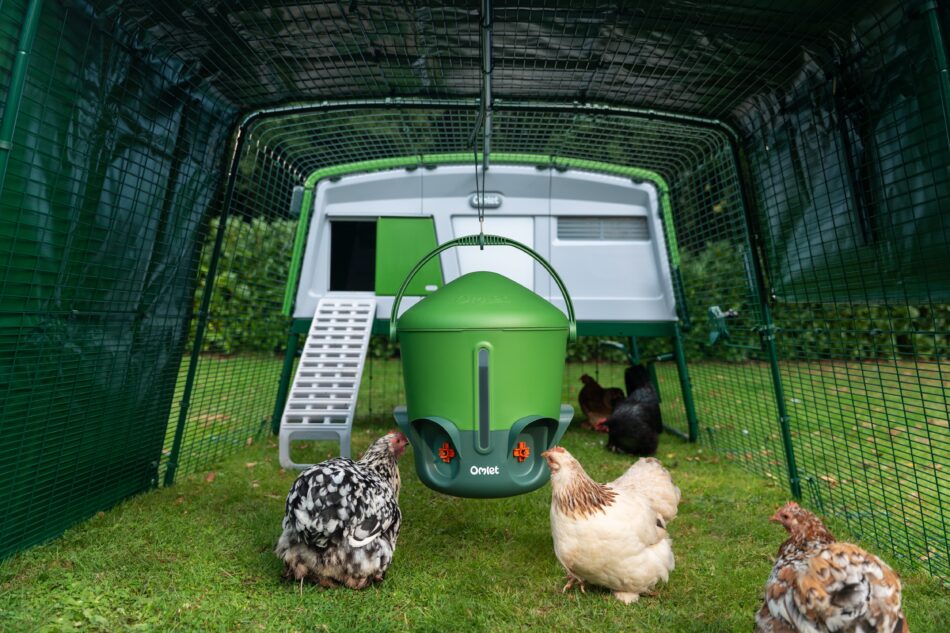
When it comes to choosing the best chicken waterer for your flock, you want something that keeps water clean, flowing and is easy to refill. The Omlet Insulated Chicken Waterer keeps the water inside fluid and at a comfortable drinking temperature even when it’s freezing cold or boiling hot outside. The enclosed design also keeps out debris and algae, so your hens always have access to the freshest water possible.
Caring for your backyard chickens
Getting into a routine will come naturally after you’ve tended to your chickens for a few weeks. Coop cleaning, feeding, watering, and egg collecting are all part of the daily task list for chicken keepers. If you’re unsure about what your routine should look like, here are some things you should be doing daily and weekly to keep your coop clean and fresh:
Daily
- Let chickens out of their coop or let a Smart Automatic Chicken Coop Door do it for you
- Collect eggs from nestbox
- Check feeders and waterers and refill if necessary
- Quick health check for each chicken
- Ensure all chickens are back in the coop at night
Weekly
- Clean the coop and refresh bedding
- Clean feeders and waterers
- Tidy up the run
Chickens thrive on routine, and will help you establish one that works for both of you. Most chickens are ready to go out of the coop at sunrise, and will naturally go in to roost around sunset. Hens will usually lay eggs in the late morning or early afternoon, but the timing will vary between chickens and seasons. It’s not common for hens to lay eggs overnight, but it’s good practice to check the nesting boxes each time you visit the coop.
Zoning laws, predators, & protection from seasons
You’ll need to make a few adjustments to your flock’s setup depending on where you live. Luckily, Omlet makes it easy to adapt and overcome obstacles as a new chicken keeper.
Chicken zoning laws
Before heading out and purchasing your chickens, be sure to check with your local city or county office to make sure that you can keep chickens where you live. Most states leave it up to individual cities or governing authorities such as homeowners associations (HOA) to create and enforce laws about keeping chickens.
Many cities allow chickens to be kept in backyards, but will have restrictions or requirements. These may include:
- Flock size
- Coop type and location
- Prohibiting roosters
If you’re part of an HOA, they may have additional regulations apart from the city you live in. Once you’ve obtained permission with the city, check your HOA bylaws or contact a board member to see if you can keep chickens.
Omlet has a chicken coop for every size flock to accommodate size regulations. And, with optional wheels and handles for every coop and attached run, you can move your Omlet chicken coop around your yard to comply with guidelines. Since our coops aren’t permanent structures, it’s unlikely that you’ll need a permit or a cement pad to place one in your backyard.
Chicken predators
Chicken predators are an unavoidable part of keeping a flock. No matter where you live you’ll encounter predators that will try to take advantage of hens that aren’t fully protected. From coyotes, foxes, and bears in the country, to racoons, hawks, and even neighborhood dogs and cats inside of city limits, you’ll need to fortify your flock’s home. Some common predators you may encounter include:
- Coyotes
- Raccoons
- Hawks or other birds of prey
- Foxes
- Cats and dogs
- Snakes (mainly in search of eggs, but some species will go after hens)
Make sure your chicken coop doors are secure and have mechanisms that can’t be pried open by pesky paws. Installing an automatic chicken coop door adds an extra layer of protection between your hens and predators trying to get in a closed-up coop. The horizontal open and closing mechanism helps prevent the door being pried open – unlike vertical opening doors.
Omlet has also taken protective measures against racoons. Raccoons are known to use their hand-like paws to turn knobs and levers, or reach through wire to get to their prey. The tightly spaced wire across the bottom of our chicken runs prevents them from reaching your hens. The Eglu Cube and Eglu Pro also have raccoon-resistant access door handles that also double as child-safety locks.
Seasonal protection
As outdoor pets, your chickens need different care during different times of the year. Most chicken keepers elect to cover their chickens’ runs to protect them from the elements. Omlet’s line of heavy-duty chicken run covers offers protection from rain, snow, wind, and harmful UV rays. Our dark green tarps are perfect for providing shade on a hot summer day, while our clear tarps allow sunlight to filter through to warm your hens during the chilly winter months.
The temperate weather of spring and fall is favorable for hens, depending on your location. And while most breeds of chicken tolerate both high and low temperatures, if your area experiences extreme temperatures you’ll need to take additional measures to keep your hens comfortable.
To keep your hens cool in the summer, make sure they have plenty of water and shade. Offer treats to help your hens cool off, like frozen corn or fresh melon. Omlet’s chicken coops keep hens cool through the thoughtful design of the twin-wall insulated panels and will help your flock weather the warm summer nights.
During extreme cold temperatures in the winter, consider adding an extreme temperature jacket to your chickens’ coop. While our Eglu chicken coops are designed to keep the inside temperature at a comfortable level, your hens will appreciate the extra layer of insulation during the bitterly cold months, especially if you opt for a small flock or small breeds. Be sure to also offer your hens plenty of perching space as reprieve from the frozen ground. Offer warming chicken treats to keep their metabolisms up and to promote egg laying.
How many eggs do chickens lay per year?
Egg-laying breeds of chickens will produce approximately one egg every day and a half. That means that during peak laying age (around two years old), high-producing egg layers can produce between 250-300 eggs per year. But do they need your help to accomplish this?
Many first-time chicken owners wonder what they can do to encourage hens to lay eggs. The main components to help keep hens happily laying are:
- Quality feed
- Fresh water
- Adequate space
- A clean environment
- Feeling safe
If these needs are being met, your hens should lay on a regular schedule, routinely providing fresh eggs for your family. Once collected, fresh eggs can be stored at room temperature or in the fridge for several weeks.
What first-time chicken keepers should avoid
Chickens can make wonderful, entertaining pets that offer enjoyment to any family – so long as expectations are realistic and preparations are made. Before diving into the world of chickens, remember:
- Don’t expect chickens to be cuddly, hands-on pets, they’re friendly, but usually prefer a little space.
- Avoid buying cheap, flimsy coops or runs that might rot or fall apart; invest in quality from the start.
- Don’t forget that chickens live outdoors all year; make sure their setup can handle changing weather.
- Don’t try raising chicks unless you have a safe brooder, can manage the hatching process, and have time to care for them for 2–3 months before they move outside.
- Never skip checking with your local authorities about keeping chickens or setting up a coop.
- Don’t bring home chickens without researching the breeds that best fit your lifestyle and space.
- And most importantly, don’t forget to have fun and enjoy the experience!

Begin keeping chickens with Omlet
Starting your chicken-keeping adventure should feel exciting, not overwhelming—and that’s where Omlet comes in. We’re here to make every step easy, fun, and full of possibilities. With our clever products, you can spend less time worrying and more time enjoying your flock’s antics and unique personalities. Add a little extra joy to your coop with our Chicken Swing or let your hens explore with the Customizable PoleTree Chicken Perch. With Omlet by your side, you’ll have everything you need to create a happy, healthy, and endlessly entertaining home for your chickens right from the very first day.
This entry was posted in Chickens