 FREE shipping on orders over $100
  10% off your first order
  180-day guarantee
 Jeremy Gary’s guide to chicken molting: signs, stages and how to care for your hens
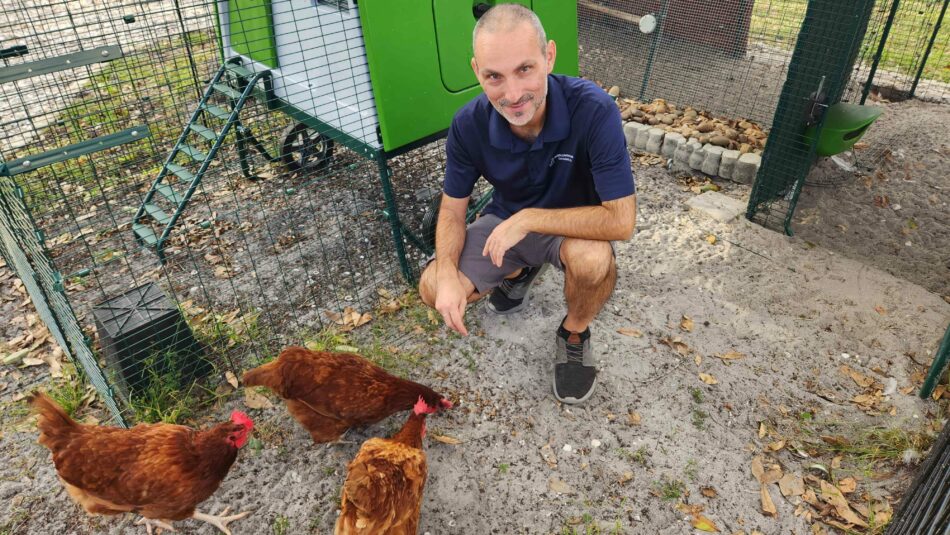
We worked with Jeremy Gary, Omlet Ambassador and backyard chicken keeper from Venice, Florida, to put this guide together. Jeremy’s hands-on experience raising chickens in a hot, humid climate gives him a practical perspective that’s hard to find anywhere else.
If you’ve noticed feathers on the ground and your hens looking a little patchy, don’t panic. Your chickens are almost certainly molting – a completely natural, annual process where they shed old feathers and grow new ones. It’s normal, it’s temporary, and with a little extra care, your flock will come through it just fine.
Is it a molt? How to tell
Before you worry, run through this quick checklist. Molting is the most likely explanation if:
- Feather loss follows a pattern – it typically starts at the head and neck, then moves down the back toward the tail
- More than one chicken is affected – molting often happens across a flock at the same time, usually in fall
- Egg laying has slowed or stopped – this is one of the first signs, and it’s completely normal
- Your chickens seem a little off – reduced activity, smaller appetite, and wanting more alone time are all common during a molt
- You can see pin feathers – these are the new feathers coming in, and they look like small, waxy spikes emerging from the skin
If feather loss is patchy, concentrated in one spot, or accompanied by visible irritation or injury, it could be feather pecking or mites rather than a molt. Our guide to chicken health covers what to look for if you’re not sure.
What is molting, and why does it happen?
Molting is the natural process of feather replacement in chickens. Feathers are critical for insulation and protection, but they wear out over time. The molt gives chickens a chance to replace damaged, dirty, or worn feathers with a fresh set before the colder months arrive.
All animals go through some kind of seasonal transition. Dogs shed their summer coat. Wild birds migrate. Chickens molt. It usually happens once a year, though the timing can vary depending on breed, age, and environment.
Understanding that molting is normal and natural is the first step to supporting your flock through it. Once you know what to expect, it’s much less stressful for everyone – including you.
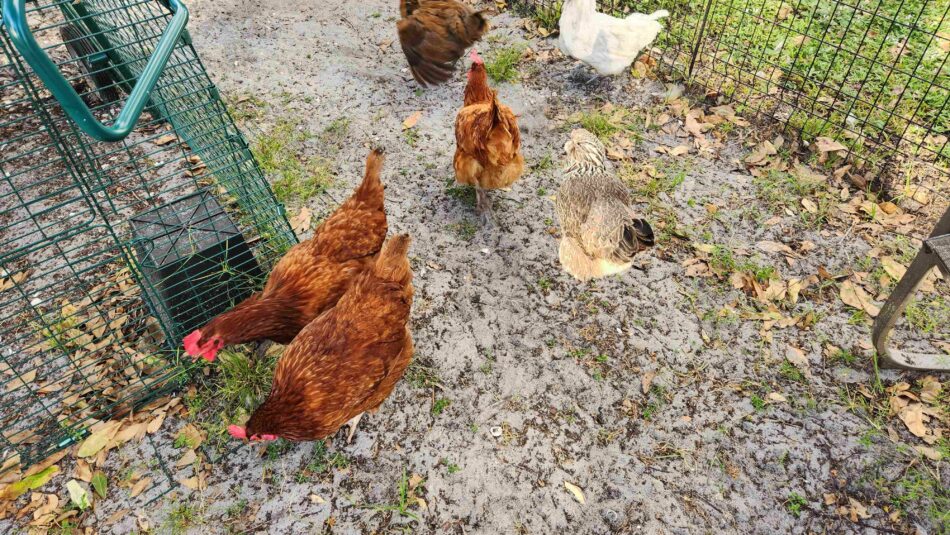
A practical timeline: what to expect
Molting can last anywhere from a few weeks to a few months, depending on the individual chicken. Here’s a rough idea of how it typically unfolds.
Weeks 1-2: Pre-molt
This is the quiet before the storm. You may notice your chickens slowing down – less activity, a smaller appetite, and egg laying starting to taper off. Their bodies are conserving energy in preparation for feather replacement, which is a surprisingly high-energy process. This phase can last anywhere from a few days to a few weeks.
Weeks 2-6: Active molt
Feathers start falling. Loss usually begins at the head and neck, then works its way back toward the tail. Your chickens may look bare and patchy during this phase – that’s completely normal. They’re also likely to be more irritable and may want to spend time away from the rest of the flock. Handle them gently and give them space.
Weeks 6-12: Regrowth
New feathers begin emerging from the follicles where the old ones fell out. These pin feathers – the thin, waxy-looking spikes you’ll see on the skin – are sensitive and can be easily damaged, so avoid unnecessary handling during this phase. You may notice your chickens preening more than usual as they work to remove the waxy coating and fluff up their new feathers. Once regrowth is complete, normal activity, social behavior, and egg laying all return.
How to help your hens through a molt
Nutrition: prioritize protein
Feathers are made almost entirely of protein, so your chickens’ nutritional needs increase significantly during a molt. A high-protein diet is the single most important thing you can do to support healthy feather regrowth.
- Switch to a higher-protein feed during the molting period if possible
- Supplement with protein-rich treats like mealworms, soldier fly larvae, or sunflower seeds
- Always make sure your flock has access to clean, fresh water – hydration matters just as much as feed
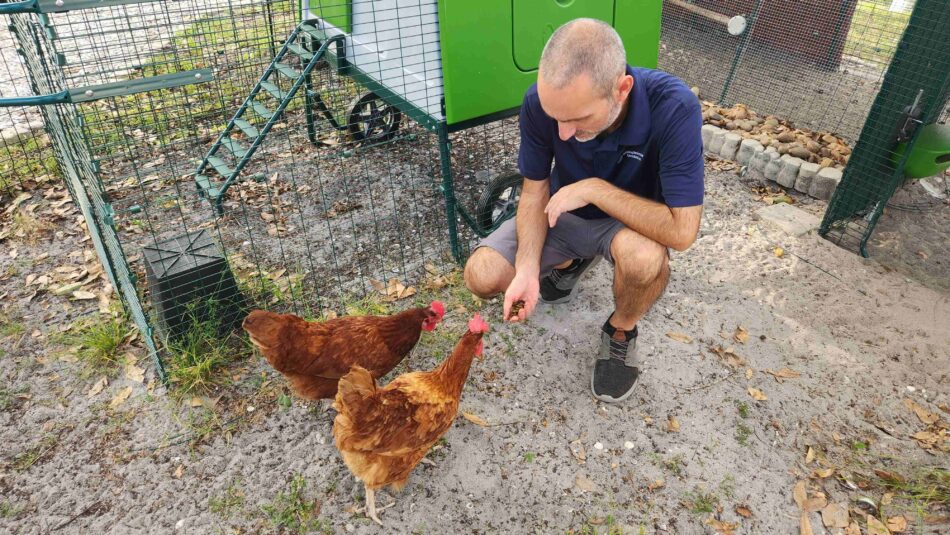
Jeremy’s flock in Florida loves soldier fly larvae as a protein boost during the molt.
General care tips
- Go easy on handling. Molting chickens are more sensitive and irritable than usual. Be patient if they want a little alone time.
- Keep them sheltered. Without a full set of feathers, your chickens are more vulnerable to temperature extremes, rain, and predators. Make sure their coop and run offer proper protection.
- Keep the coop clean. A clean environment helps prevent parasites and infections, which can make molting harder on your flock.
- Adjust for your climate. In colder areas, consider adding extra warmth to exposed areas of the coop. In hot, humid climates like SW Florida, shade and cool treats – ice cubes in the water, frozen watermelon – can make a real difference. Even in October, heat and humidity can be an issue, and molting often begins just as the stress of a long summer is winding down for the chickens.
How your coop setup can help
A clean, secure, well-ventilated coop makes molting easier on your flock – and this is exactly where a well-designed setup like the Omlet Eglu Cube earns its keep.
The Eglu Cube’s smooth plastic construction makes it easy to keep clean, which is especially important when your chickens are more vulnerable to infection. Its robust build keeps predators out during the molting period when your hens are at their most exposed. And its insulation and ventilation design helps regulate temperature and humidity – critical for comfort whether you’re dealing with a Florida fall or a cold snap in the Northeast.
Jeremy’s Eglu Cube even survived a Category 4 hurricane. But that’s a story for another post.
The bottom line
Molting is one of those things that looks alarming the first time you see it – feathers everywhere, patchy-looking chickens, egg laying grinding to a halt. But it’s one of the most natural parts of keeping chickens.
Give your flock a protein-rich diet, a clean and secure shelter, and a little extra patience, and they’ll come out the other side with a beautiful new set of feathers ready to last them through the year.
As Jeremy puts it: the most important thing of all is an extra-large portion of chicken-owner love.
Jeremy Gary is an Omlet Ambassador based in Venice, Florida. He owns and operates a building science consulting business, and his expertise in temperature and moisture dynamics has proved invaluable in keeping chickens in a hot, humid climate. He purchased his first Omlet product – an Eglu Cube – long before joining the Ambassador Program, and says it transformed his family’s chicken-keeping experience.
This entry was posted in Chickens
3 replies on “Jeremy Gary’s guide to chicken molting: signs, stages and how to care for your hens”
Thanks for the information on molten. Very helpful.
Wonderful information. I am a chicken owner with an Eglu Cube living in Florida. So much about molting I didn’t know.
I have 2 hens. One started molting in October. She is in the last phase of molting and has re grown most of her feathers. The other hen, however, has not started molting yet. I had presumed that she would start soon after the first hen started. I also assumed that molting was done before winter. Is it possible that hens molt at other times of the year? I am new to chicken keeping (8months now), so I’m just learning about chickens and their care.