FREE shipping on orders over $100
  10% off your first order
  180-day guarantee
 A Pets’ Guide to Surviving Fireworks
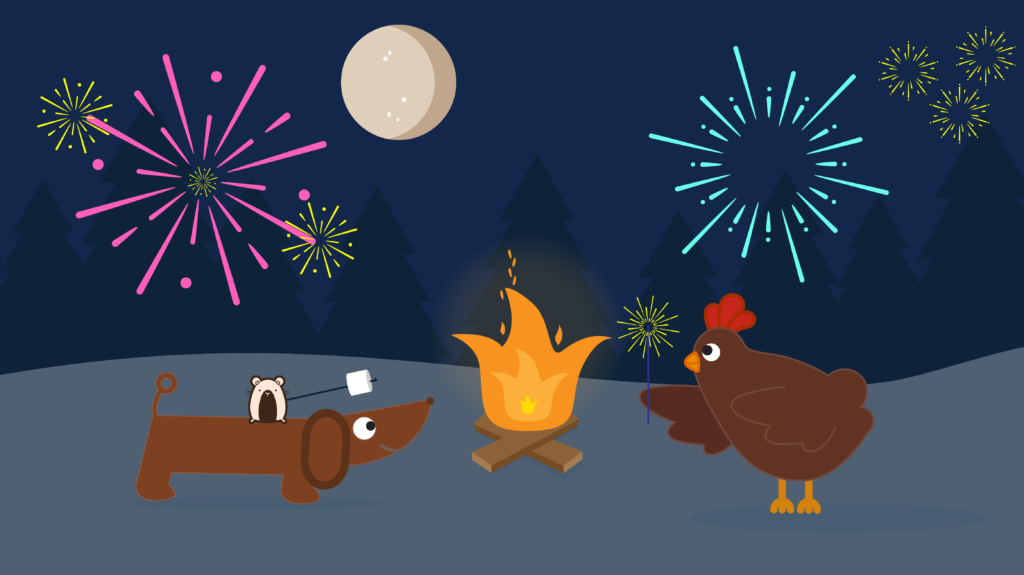
Some pets hardly seem to notice fireworks. Others hide quietly until it’s all over. But some are genuinely traumatised by the noisy, flashing skies of Independence Day.
For a pet who’s afraid of the bangs, whizzes and flashes, the fireworks season is bad news. There are, however, a few things you can do to minimise the stress.
The Big Bang
When talking about pets hating fireworks, we’re usually talking about dogs. Some dog charities estimates that 45% of dogs are afraid of fireworks to some degree.
Cats will find a quiet space away from all the fuss (although some individuals certainly get stressed by all the noise). Keep your cats indoors when the fireworks are going on. They can quickly panic if fireworks go off suddenly nearby, or if sparkler-waving children come running down the street.
Small animals such as gerbils, hamsters and guinea pigs will either ignore the explosions or sit it out in their hidey holes.
Most caged birds don’t enjoy the sudden rupturing of the night skies – they like their nights to be dark and their days to be light, not a crazy mixture of the two. If your parakeet, parrot, canary or pet finch is in a room affected by the flashing lights, you might want to cover the cage. But some birds don’t seem to ruffle a feather, in spite of the fireworks.
What you should never do is allow the pets to be trapped in their outdoor runs or aviaries with no bolt hole. As long as outdoor pets have a covered area to escape to, they should be fine.
Dogs Hate Fireworks
If your dog isn’t too fazed by the noise and lights, simply keep him indoors while the party rages outside. For more skittish dogs, there are a few extra precautions to take.
- Stay indoors with the curtains and windows closed. A scared dog caught outside is very likely to run away.
- Use a crate or other safe space. If there’s somewhere the dog associates with safety – a Fido Crate, perhaps, or a quiet room with a dog bed – make use of it. If there’s a room facing away from the main area of firework activity, put the dog in there. A bathroom often works well for this purpose. Gentle music can help keep out the noise too. Put familiar objects in the safe room – the dog’s bed and blanket, and some favourite toys. And stay with him, unless he’s happy to curl up and sleep through the storm.
- For very nervous dogs, vets recommend a wrap or dog vest, tight enough to apply gentle, constant pressure. This soothes and calms your poor pet.
- Stay calm yourself, and stay with your dog. That will help enormously.
- Don’t be tempted to let your dog go outside for any reason, and make sure he’s had his walk before the celebrations begin. Even a dog who takes it all in his stride indoors might suddenly panic outdoors when the fireworks start to fizz.
Prepare In Advance
You can desensitise dogs to the sound of fireworks to a certain extent, by getting them used to loud noises. The best way to do this is to play thunderstorm or fireworks sounds at a low volume, giving the dog treats and lots of fuss and play in the meantime. If you then increase the volume while keeping up the treats and play, it will, in most cases, make your dog associate the noise with good times.
This doesn’t work with all dogs, but it’s definitely worth a try if you want to have a stress-free 4th July. There’s not long to go, so better start now!
No comments yet - Leave a comment
This entry was posted in Pets on July 1st, 2020 by linnearask