If you have problems with your cat eating their food too quickly, try changing their food bowl to a larger, shallow plate. This will slow them down significantly as they have to take smaller mouthfuls, which minimizes the risk of the food coming back up again.
2.
If you’re worried your cat doesn’t drink enough water, try putting the water bowl in a different spot to where they get fed. In the wild, cats will not drink at the same place as they eat to avoid the meat contaminating the water, and this behaviour lives on with some pet cats.
3.
Does your cat rub against your laptop or try to sit on the keyboard as you’re trying to work from home? Bring out the best cat toy of all time, the cardboard box! Place a box on your desk and most cats will forget about you and happily play or curl up in the box.
4.
Try freezing some of the treats you give to your cat. The unusual texture and temperature of the treat will stimulate several of the cat’s senses and encourage explorative play. This is especially good in summer when the cat will love the cooling effect even more.
5.
If you want to keep your cat off the kitchen counter, a new sofa or an expensive side table, put some double-sided tape over the surface where the cat’s sharp claws would cause damage. Cats hate the feeling of the sticky tape and will quickly learn to avoid these spots. At that point you can remove the tape.
6.
The best way to avoid cat hair all over the house is to get on top of grooming and brush your cat regularly, preferably daily. It doesn’t only decrease unwanted shedding; it also helps the cat groom itself and prevents matted fur and hairballs. Get a brush that suits your cat’s type of hair and make it a lovely time of the day together with your cat.
7.
For fur that has gathered on carpets and upholstery, put on a rubber glove and run your hand over the surface to gather up pet hair. Shower squeegees can also be useful for this task!
8.
Potted plants sometimes become alternative litter boxes, which is neither nice nor very good for the plant. To stop your cat from going in the pot, cover the soil with a layer of pinecones. These blend in nicely but will put your feline friend off.
9.
One of the best ways of stimulating an indoor cat is to give them a place to climb. If you haven’t got enough space for a large climbing station, put up some shelves that the cat can explore.
10.
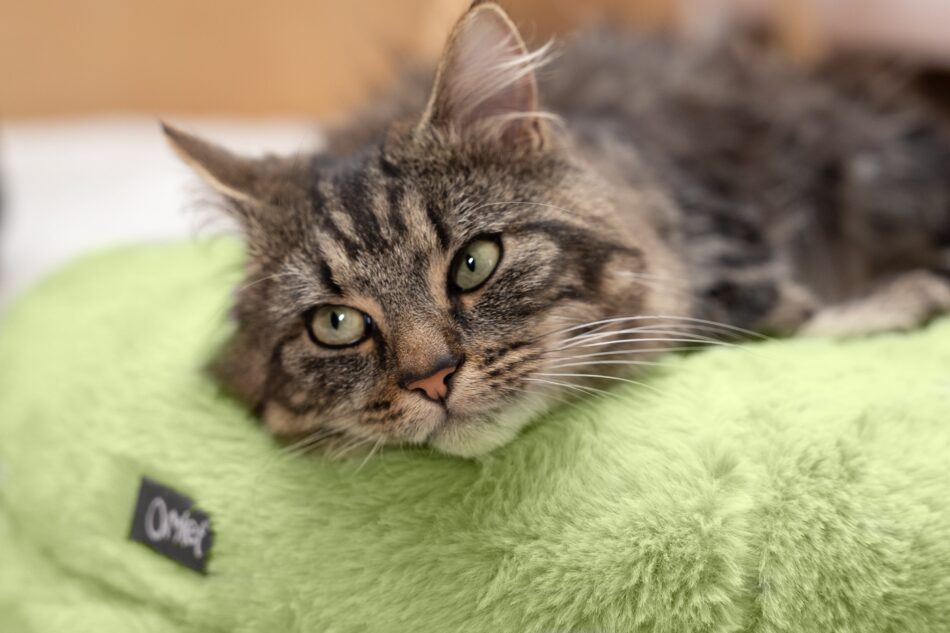
No matter how much you groom your cat and make sure the house is nice and clean, the cat’s bed will still be exposed to a lot of hair and dirt. Make sure you get a cat bed with a machine washable cover that can be cleaned over and over again without fading or weakening.
Backyard chickens are tougher than they look, but summer heat is one of the few things that can make their health deteriorate fast. When temperatures climb above 85°F, your flock starts to struggle. Above 95°F, you’re in dangerous territory. Unlike cold weather, where chickens generate their own body heat and huddle together, there’s no built-in defense against extreme heat. With a few adjustments to their environment and a clear understanding of how heat affects chickens, you can make summer much easier for your flock.
What Temperature Is Too Hot for Backyard Chickens?
Chickens begin to feel heat stress at 85°F (29°C) and face serious risk above 95°F (35°C). But temperature alone doesn’t tell the full story. Humidity compounds the danger significantly: a 90°F day at 80% humidity is more dangerous for your flock than a 100°F day in dry air. The combination of heat and moisture prevents the evaporative cooling that panting provides, so birds struggle to regulate their core temperature at all.
The good news is that the peak risk window is predictable: typically between 11am and 4pm, when the sun is at its highest and ambient heat is at its peak. Planning your flock checks and water refills around this window is one of the simplest and most effective things you can do.
Signs of Heat Stress in Chickens (and What to Do Right Now)
Knowing the warning signs before a crisis hits is the difference between a quick intervention and a vet call. Heat stress progresses in stages, and the earlier you catch it, the better the outcome for your bird.
Early Warning Signs
These are the subtle signals your hens give before visible distress sets in:
Loss of appetite and reduced interest in treats or feed
Reduced egg production, sometimes before any physical signs appear
Spending more time in the shade or pressed against the ground
Active Heat Stress Signs
These require immediate action:
Open-mouth panting with the neck stretched forward is the first clearly visible sign
Wings held away from the body, indicating the bird is trying to release heat through her skin
Pale or blue-tinged comb and wattles, which signal reduced blood circulation
Lethargy, stumbling, or a hen that won’t stand up, requires emergency cooling right away
How to Cool an Overheated Hen
If you spot a hen showing active heat stress signs, act quickly but calmly:
Move her immediately to a shaded, well-ventilated area
Offer cool (not ice cold) water and encourage her to drink
Wet her legs and feet only, not her whole body, as a sudden temperature shock can make things worse
Keep her calm and away from the rest of the flock
Never dunk or spray a heat-stressed hen’s whole body. The rapid temperature change can send her into shock. Gradual cooling is always the safer approach.
When to call a vet: If a hen is unresponsive, has labored breathing, or cannot stand after 20 minutes of gradual cooling, contact your veterinarian. Heat stroke in chickens can be fatal without professional intervention.
How to Keep the Chicken Coop Cool in Summer
The ideal internal coop temperature is below 80°F. Above that threshold, egg production drops and health risks climb. What happens inside the coop at night matters just as much as what happens during the day, because a coop that has absorbed heat all afternoon will keep releasing it for hours after the sun goes down, right when your hens are trying to rest.
Coop Placement and Airflow
Where your coop sits in your yard has a significant impact on how hot it gets:
Position the east or north sideof the coop against a structure, or under a deciduous tree, to block the intense afternoon sun
Ventilation must create cross-flow airflow, meaning air enters from one side and exits from another, rather than just having one opening that traps warm air
Cover 60-70% of the roof to provide shade, if you can’t place the east or north side of the coop against a structure, use a cover on one side but ensure air still flows through the enclosure
A battery-powered or USB fan pointed at the roosting area can drop coop temperature by 5-10°F on still days. Frozen water bottles placed near the roosting bars before nightfall also help bring the overnight temperature down.
Why Coop Material Matters
Wooden coops absorb and retain heat throughout the day, then release it at night, exactly when your chickens need to cool down. This is one of the most overlooked risks in summer chicken keeping.
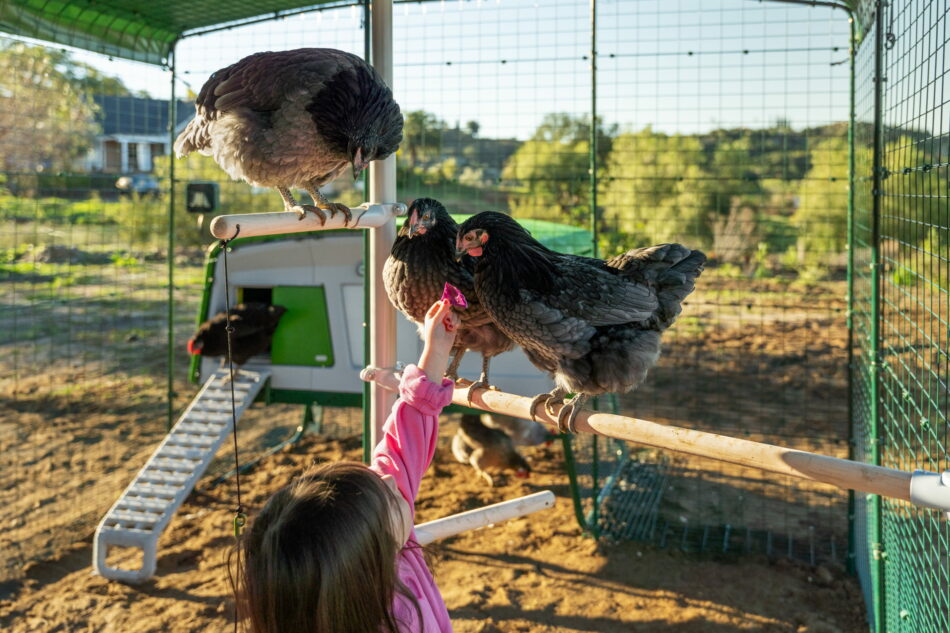
Twin-wall insulated plastic coops, like the Omlet Eglu range, work very differently. The twin-wall construction means the outer surface absorbs heat without transferring it to the interior, so the inside of the coop stays significantly cooler than a wooden alternative on a hot day. The material also doesn’t retain heat overnight, giving your hens a genuinely comfortable place to roost even during a prolonged heatwave.
Key takeaway: If you’re finding your flock reluctant to go into the coop at night during summer, it’s almost always a heat retention problem with the coop material itself.
Keeping Chickens Hydrated When It’s Hot
Hydration is the single most critical factor in keeping your flock safe during a heatwave. Dehydration can become life-threatening faster than the ambient temperature itself, and it’s entirely preventable with the right setup.
During hot weather, chickens can drink double their normal daily water intake. A flock that usually gets through half a gallon a day may need a gallon and a half or more when temperatures spike. Plan for this before a heatwave, not during one.
Water Temperature Matters More Than You Think
Water above 60°F is significantly less effective at cooling a chicken’s core body temperature. This is why simply refilling a warm drinker isn’t enough on a 95°F day. Cool water actively helps bring body temperature down; warm water barely helps at all.
Practical ways to keep water cool:
Place all waterers in shaded spots to slow warming
Add ice to open drinkers during peak heat hours
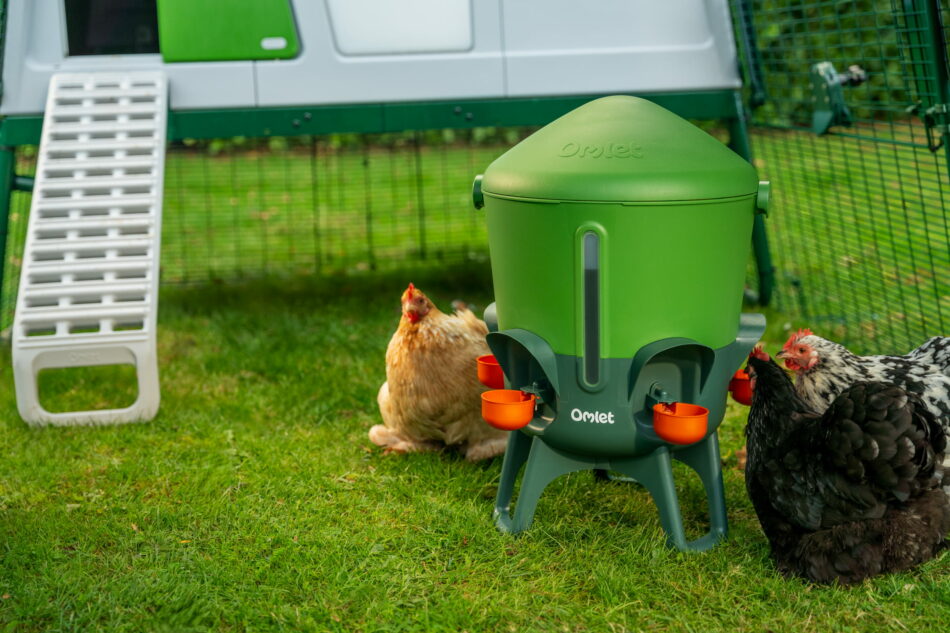
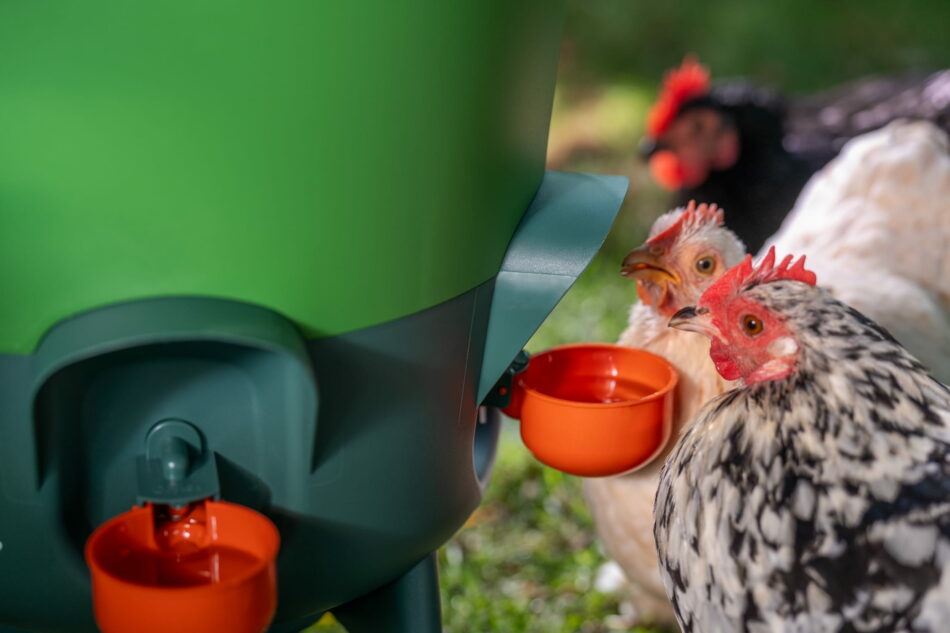
Invest in an insulated waterer, like the Omlet Insulated Stay Clean Chicken Waterer, which is tested to maintain cool temperatures in up to 90°F heat for 10 hours without any ice needed (and even longer with ice!)
Positioning and Hygiene
Heat-stressed birds won’t walk far to drink. Place multiple waterers around your setup, not just in one corner of the run. This is especially important for crested breeds that may struggle to locate a single water source.
Warm, stagnant water grows algae and bacteria rapidly, which is a real health risk in summer. Clean and refill open drinkers frequently. An enclosed waterer is a brilliant solution here: by blocking sunlight from reaching the water, it prevents the algae growth that open containers encourage. The Omlet Insulated Waterer blocks 99% of light, keeping water clean for days without the daily scrubbing that open containers demand.
For extreme heat, electrolyte supplements added to water (available at farm stores) help replenish the minerals your hens lose through panting. This is worth having on hand before summer arrives.
Got more questions about chickens and water? Check out our water guide.
Which Chicken Breeds Struggle Most in the Heat?
Understanding your flock’s breed composition helps you set up your summer care routine correctly. If you keep a mixed flock, always manage your setup for the most heat-vulnerable breed you have. The hardiest birds will be fine; the sensitive ones may not be.
Breeds That Need Extra Attention in Summer
Feather-footed breeds (Cochins, Brahmas, Faverolles) The extra feathering around their legs and feet traps heat and limits their ability to release it through their skin. Check their feet and shanks regularly for warmth or swelling during hot spells.
Crested breeds (Polish, Silkies, Houdans) Head feathers can obstruct vision, meaning these birds may not spot a water source that other hens find easily. Place multiple drinkers at different heights and positions around the run to make sure they always have access.
Dense-feathered breeds (Orpingtons, Wyandottes) Their thick plumage limits the airflow around their bodies. Unlike lighter-feathered breeds that can fluff their feathers to create cooling air pockets, dense-feathered hens have less ability to self-regulate through this mechanism.
Roosters and older hens are also more vulnerable than young pullets, so keep a closer eye on the senior members of your flock during hot spells.
Chickens in a shaded area, whether under trees or with run covers fitted, can cope with higher temperatures than birds exposed to direct sun. Shade is one of the most effective and lowest-cost tools you have.
Breeds That Handle Summer Well
Mediterranean and desert-origin breeds are naturally adapted to heat and generally manage warm summers with minimal intervention:
Leghorns
Anconas
Fayoumis
Penedesencas
Egyptians
These breeds tend to have larger combs and wattles, which act as natural radiators to release body heat, and lighter feathering that allows better airflow.
Does Heat Affect Egg Production?
Yes, and more significantly than most keepers expect. Hens require a core body temperature of around 104-107°F to function normally. When external heat pushes that range, the body diverts energy away from egg production to focus on survival. The result is a measurable drop in your egg basket.
Expect a 10-25% reduction in laying during weeks where temperatures consistently exceed 90°F. Some hens, particularly older ones or heavy breeds, may stop laying entirely until cooler weather returns.
Heat and Eggshell Quality
Reduced laying isn’t the only change you’ll notice. Heat also affects the physical quality of the eggs your hens do produce.
When hens pant to cool down, they expel CO2. This disrupts the calcium carbonate process that forms eggshells, leading to thin, soft, or pitted shells even in hens that are otherwise healthy and well-fed. If you’re seeing shell quality issues during a heatwave, heat is almost certainly the cause, not a calcium deficiency.
Broodiness and Egg Collection
Broodiness increases in summer. A broody hen stops laying completely and generates significant body heat by sitting tight on a nest, which compounds the heat problem for her and any hens sharing the space. If you have a broody hen during a heatwave, move her to a cooler, darker space to break the cycle faster.
Collect eggs twice daily in summer. Eggs left in a warm nest box can reach unsafe temperatures within a few hours. They’re also more likely to encourage broodiness in other hens, creating a cycle that reduces your overall flock production for weeks.
Key Takeaways: Keeping Chickens Cool in Summer
Know the temperature thresholds before a heatwave hits, not during one. Chickens are at serious risk above 95°F, and heat stress begins at 85°F. Humidity makes both thresholds more dangerous.
Panting with an outstretched neck, pale combs, wings held away from the body or an inability to stand are emergency warning signs. Act within minutes, not hours.
Dehydration kills faster than the outside temperature itself. Refresh water regularly to keep it cool, or invest in an insulated waterer to maintain optimal drinking temperature throughout the day.
Maintain active airflow in the coop and run. Cover no more than 60-70% of the run roof, using a cover on only one side if you’re unable to place the north or east side of your coop against a wall.
Feather-footed and crested breeds need extra monitoring. They overheat faster and may not locate water sources without help. Multiple waterers placed around the run are essential.
Expect a 10-25% drop in egg production during heatwaves. Thin-shelled eggs are a sign that heat is disrupting your hens’ calcium absorption process, not a feeding problem.
Collect eggs twice daily in summer to prevent unsafe temperatures in the nest box and reduce the risk of broodiness spreading through the flock.
Omlet and Your Flock This Summer
Keeping your flock cool is easier when your setup is already doing the work for you. The right equipment doesn’t just make summer safer for your hens; it reduces the daily effort required from you.
The Eglu chicken coop range uses twin-wall insulation that keeps internal temperatures significantly lower than wooden alternatives on hot days, and doesn’t trap heat overnight when your hens need to rest. For your run, our weather protection covers block the harshest afternoon sun while leaving enough open space for airflow, giving your hens a shaded retreat without turning the run into a heat trap.
For hydration, the Omlet Insulated Stay Clean Chicken Waterer is designed specifically for the challenges of summer keeping. It maintains cool water temperatures for up to 10 hours in 90°F heat, blocks 99% of sunlight to prevent algae growth, and holds enough water for a flock of 8 hens for three days. That’s fewer daily refills and consistently cooler water, exactly when your hens need it most.
By clicking "Accept All", you agree to the storing of cookies on your device to enhance site navigation, analyze site usage, and assist in our marketing efforts.
Privacy Preference Centre
When you visit any website, it may store or retrieve information on your browser, mostly in the form of cookies. This information might be about you, your preferences or your device and is mostly used to make the site work as you expect it to. The information does not usually directly identify you, but it can give you a more personalized web experience. Because we respect your right to privacy, you can choose not to allow some types of cookies. Click on the different category headings to find out more and change our default settings. However, blocking some types of cookies may impact your experience of the site and the services we are able to offer.
Manage Consent Preferences
Always Active
These cookies are necessary for the website to function and cannot be switched off in our systems. They are usually only set in response to actions made by you which amount to a request for services, such as setting your privacy preferences, logging in or filling in forms. You can set your browser to block or alert you about these cookies, but some parts of the site will not then work. These cookies do not store any personally identifiable information.
These cookies allow us to count visits and traffic sources so we can measure and improve the performance of our site. They help us to know which pages are the most and least popular and see how visitors move around the site. All information these cookies collect is aggregated and therefore anonymous. If you do not allow these cookies we will not know when you have visited our site, and will not be able to monitor its performance.
These cookies enable the website to provide enhanced functionality and personalisation. They may be set by us or by third party providers whose services we have added to our pages. If you do not allow these cookies then some or all of these services may not function properly.
These cookies may be set through our site by our advertising partners. They may be used by those companies to build a profile of your interests and show you relevant adverts on other sites. They do not store directly personal information, but are based on uniquely identifying your browser and internet device. If you do not allow these cookies, you will experience less targeted advertising.
 FREE shipping on orders over $100
  10% off your first order
  180-day guarantee