 FREE shipping on orders over $100
  10% off your first order
  180-day guarantee
 Can Chickens Save the World? Actually, yes!
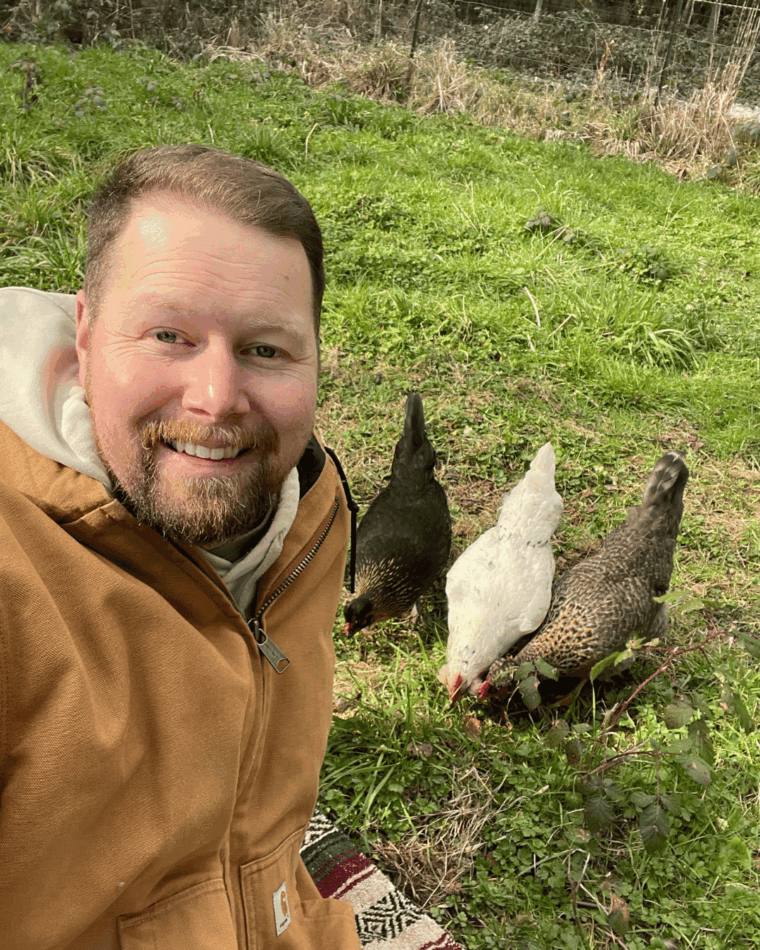
At the Northwest Flower and Garden Show in February, we met Andrew Tuttle of Edge Perma, a regenerative farm design business, (though the list of projects he’s involved with spans much wider) and chatted all things chicken and how vital they are for regenerative farming and healing land.
Through his work with Edge Perma, Andrew designs farm systems where chickens are central: building soil fertility, managing weeds and helping perennial crops thrive. “Chickens are the number one tool for regenerative success in orchards and food forests,” he says.
He’s seen it at scale too. During a farm mapping project, he visited Alexandre Family Farms in Crescent City, California. This 9,000-acre regenerative farm is doing some of the most impressive ecosystem restoration work in the country. Running mobile coops through newly planted trees, the chickens help clear grass, fertilize soil, and manage weeds, giving young trees and shrubs the best chance to grow. The farm integrates chickens alongside rotationally grazed cattle to restore habitats, protect salmon passageways and build long-term soil fertility.
“For future generations, if done right, livestock and especially chickens could be the solution to the future of food.”
The farm has even been highlighted in a White House briefing, and with the towering redwoods nearby – some of the biggest trees in the world – it’s a landscape as awe-inspiring as it is productive.
Back on his own farm, Andrew keeps a smaller flock – four hens and counting – but even at home, their impact is clear. They scratch through the orchard floor, naturally controlling grass and weeds, fertilizing the soil as they go, and helping maintain his hyper-diversified agroforestry system, which combines alley cropping (growing crops in the “lanes” between rows of trees) and silvopasture (grazing livestock in a managed forest or orchard). In the grassy rows between fruit trees and shrubs, chickens help manage competing plants and support the growth of young trees and shrubs, reducing the need for fossil-fuel-powered tractors.
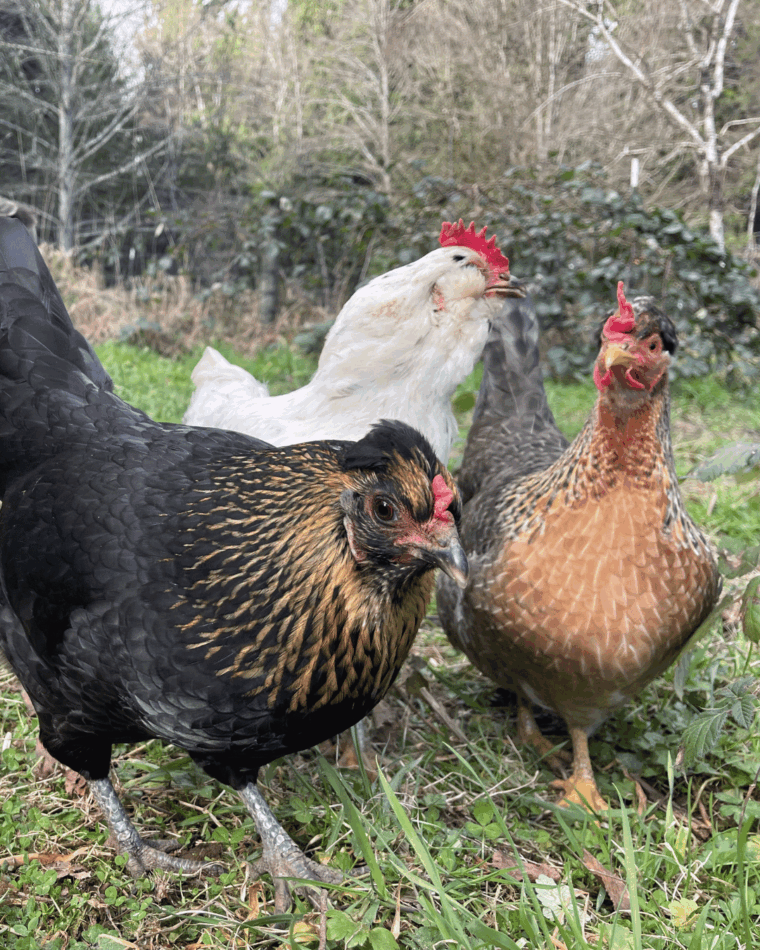
“Once we nail the predator-proof coop system we’re looking to design, we’ll be running them up and down the grassy rows, building fertility and managing competition with weeds and grasses,” he says. “Chickens can be integrated earlier on into tree-based systems in ways that sheep or goats just can’t.”
Andrew’s vision extends beyond the land itself. Edge Perma aims to fast-track the healing of the planet by showing people what’s possible, inspiring change and training others to do the same. From mapping massive farms to running small-scale projects with different farms to boost biodiversity and support local communities – he’s proving that chickens can make a difference at every scale.
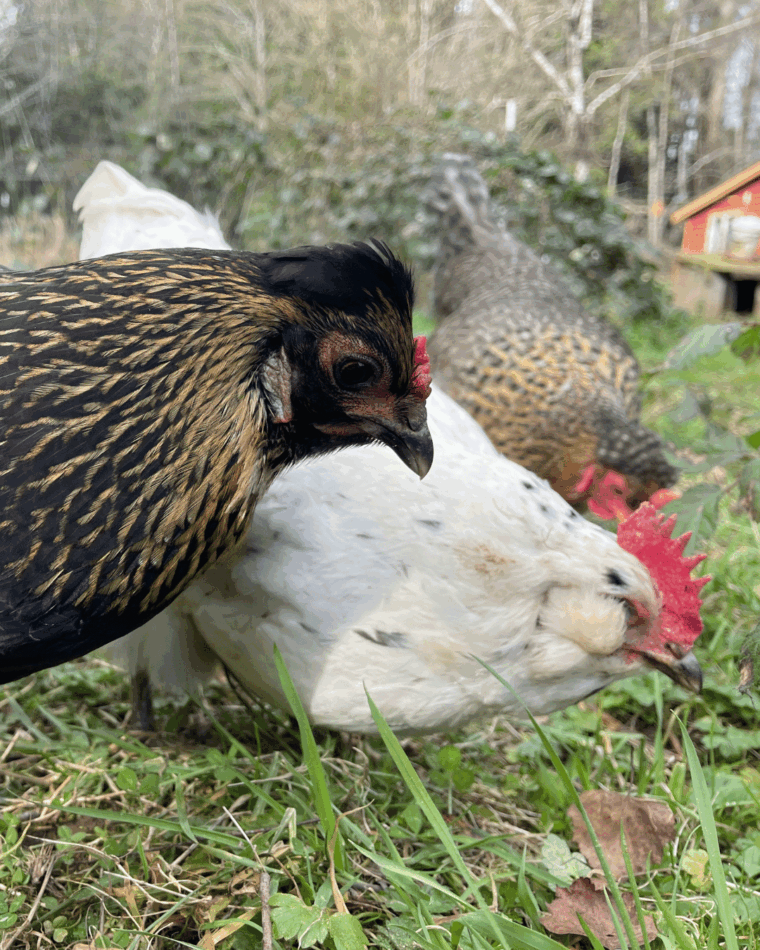
At home or on a massive farm, chickens are more than egg layers – they’re ecosystem engineers.
Andrew’s work shows that when we let them, these clever birds can build soil, shape ecosystems and transform landscapes – teaching us that the smallest members of a farm can have the biggest effect.
Thanks to Andrew for his time and the really insightful conversation. You can find out more about Edge Perma on their website.
This entry was posted in Chickens