 FREE shipping on orders over $100
  10% off your first order
  180-day guarantee
 “I’m the egg salad girl at every party!”
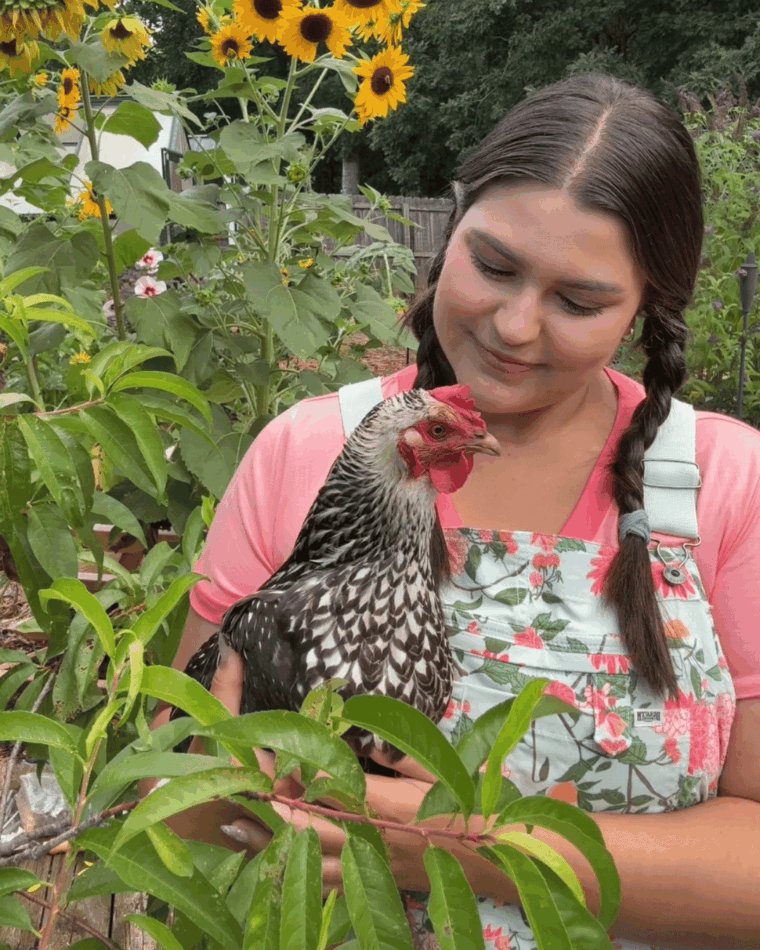
A quarter-acre and a whole heart, how Meagan started with a few garden beds and now has a full and thriving ecosystem.
We sat down with Meagan (@meggrowsplants) to talk about daily life with chickens, the joy of fresh eggs and how a small urban space can become a powerhouse of productivity. Meg specialises in growing, preserving and cooking her own food at home, she shares her top tips and recipes with her online community, as well as snippets of her chicken-keeping journey.
“It just felt natural to get chickens.”
“It was kind of a landslide,” Meagan laughs. “I started with garden beds in my backyard. We live on about a quarter of an acre, around 9,000 square feet of backyard space, and once I got into gardening, I just kept thinking: I could have chickens… and a greenhouse… and bees.” So chickens were the next logical step.
But it wasn’t just about having fresh eggs for breakfast. It was about building a system.“I’m very much an ecosystem gardener. My goal is to increase the ecosystem in my backyard. Feeding the chickens, the chickens feeding me, using their manure as compost, and then feeding that back into the garden… it’s a circle of life kind of thing.”
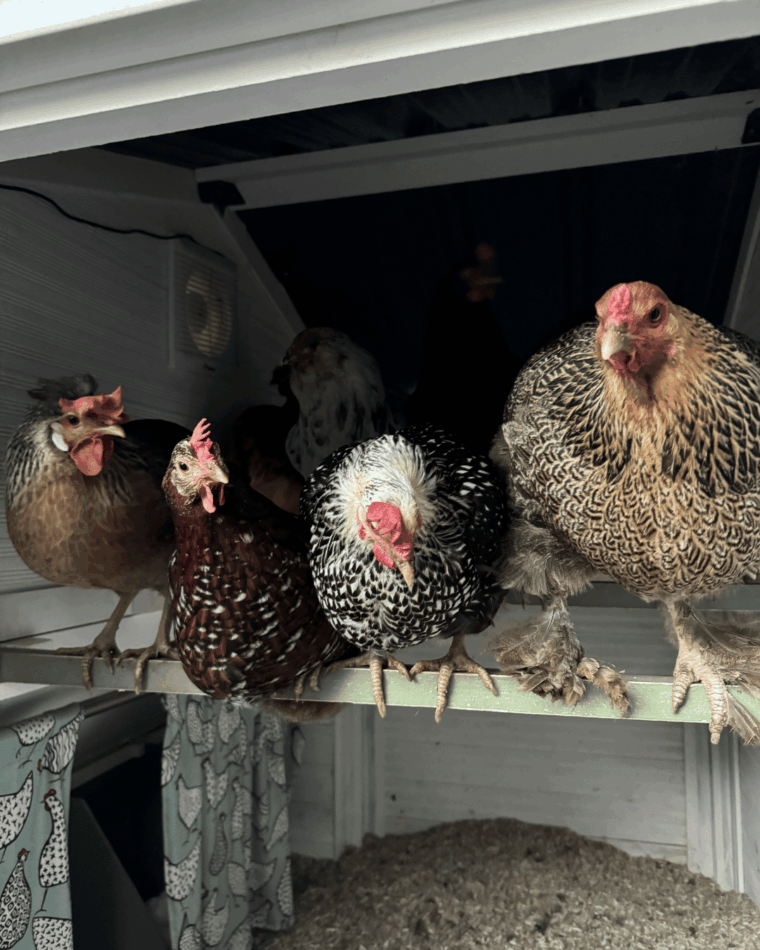
“I originally started naming them after iconic queens in history because I called them my queens.”
Meg currently keeps eight hens (no rooster – city rules won’t allow it). Each hen has a name, some after iconic historical queens: Pippi, Penny, Charlotte, Maple, Lizzy, Winona, Mavia and Hazel. The flock is a mix of breeds, “I wanted one of each, just to see how their personalities and feather patterns differ. They all get along great.”
With eight good layers, she collects around seven to eight eggs daily. “They’re really good chickens,” she says proudly. “I only have one freeloader – she goes broody a lot.”
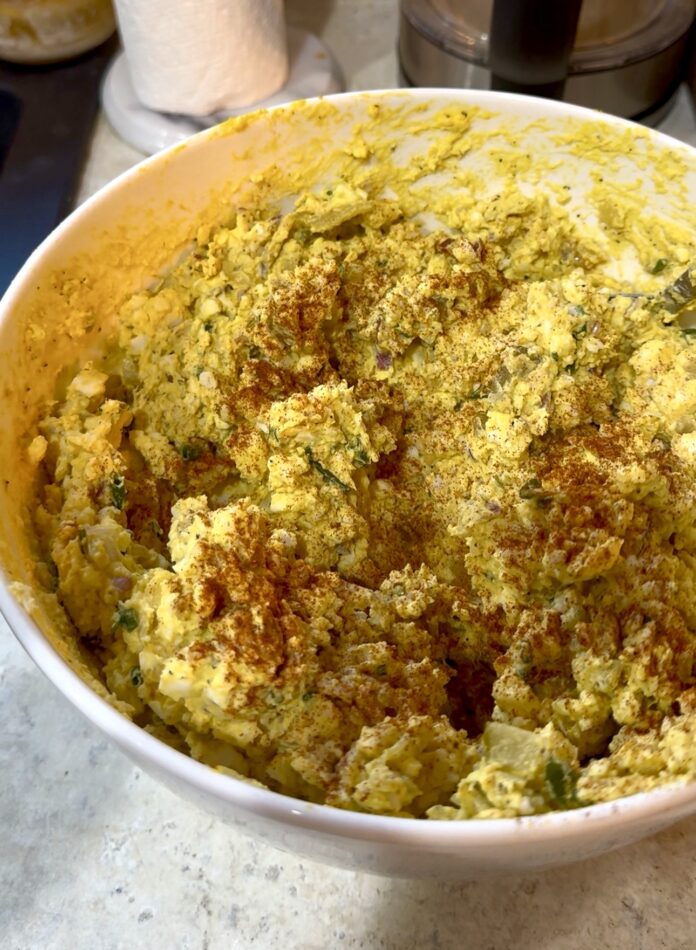
What to do with all the eggs?
“I eat a lot myself – boiled, scrambled, egg salad, deviled eggs. I’m the egg salad girl at every party.”
The surplus never goes to waste.“I bring eggs to friends whenever I visit. I give them to neighbors. I donate to a local food pantry. Eggs are such a good source of protein, and there are a lot of people who need that.” She doesn’t charge for the eggs, it just feels right to share.“I don’t really treat it like a business. They’re my chickens. They lay eggs. It feels good to give some away.”
Benefits beyond food
“They’re a reason to get up in the morning and get outside, they are part of my morning routine. I love waking up and going to see what they’re up to.” Morning light, fresh air, collecting eggs – it’s all very grounding, and the routine can do wonders for your mental health.
“I struggle with my mental health sometimes. Getting outside first thing and getting that vitamin D really helps. And I do think the chickens help in a very real way.” In the early days, she checked on them constantly. “Every five minutes,” she laughs. “Now it’s once or twice a day, but I’m in the garden a lot anyway, so we’re always kind of hanging out.”
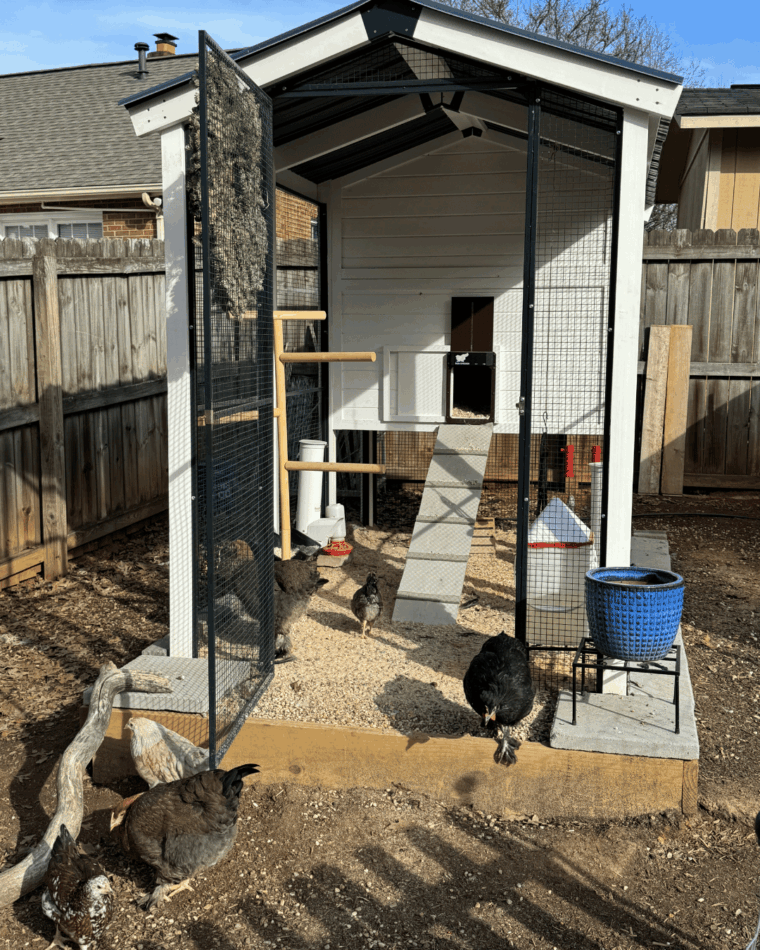
Built for the backyard
Meg’s chickens live in a sectioned off run at the back of the yard, protected by an Omlet fence. “I had another fence before, and they kept hopping over it and getting into the garden. TheOmlet fence is high enough, and I love that it’s freestanding. It was exactly what I needed.” Because she lives in the city, predator worry is relatively low, but she keeps an eye on them whenever they’re out.
Alongside the hens, Meg keeps bees. And surprisingly, the chickens help. “There’s a pest called the hive beetle. It pupates in the ground around the beehive. The chickens forage there and eat the larvae.” Since allowing the hens to scratch around the hive area, she’s noticed a reduction in beetle issues. “It’s a beneficial situation. The bees don’t care about the chickens, and the chickens help control the pests.”
“They’re my little garden helpers”
Inside Meg’s chicken run sit three large compost bins. “The chickens love foraging through the compost. It gives them something to do, and it actually helps break everything down faster.”
Chicken manure goes straight into the system. Kitchen scraps do too – anything safe and non-toxic. “They’re amazing at breaking things down. I’ll throw woody plant matter in there without even chopping it up. Two weeks later, it’s in tiny pieces.” The compost moves through a three-bin system until it’s ready to return to the garden – closing the loop once again. “They’re my little garden helpers.”
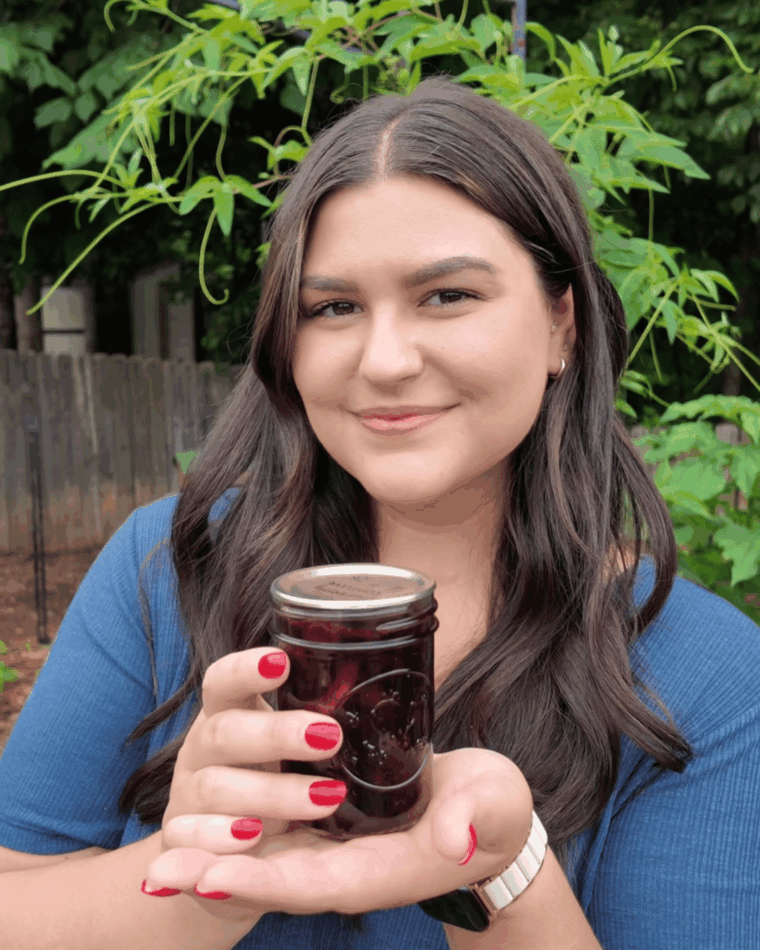
Meg’s anti-waste mindset extends to how she treats the flock. Blackberries grow wild on her dad’s land, and she forages them every year, freezing the surplus. She also freezes homegrown blueberries.
“In the summer, when it gets really hot in North Carolina, I give the chickens frozen fruit as treats. It helps cool them down.” Nothing goes unused. Meg is super into preserving and canning, and shares a lot of tips and advice in her content.
The Future: more chickens
At one point, Meg kept 14 chickens – but scaled back due to space. “In the future, though? I could definitely see myself with 50 plus chickens.” She dreams of separate coops for silkies and bantams, and eventually adding a rooster. “I’d love to breed my own crosses. I’m a science girlie – I think chicken genetics and egg colors are so cool.”
Last year, Meg gave her broody hen, Mavia, a chance at motherhood by slipping chicks under her. “She accepted them. One didn’t make it, but the other one did – that’s Pippi. So now I have a mom and daughter in my flock.”
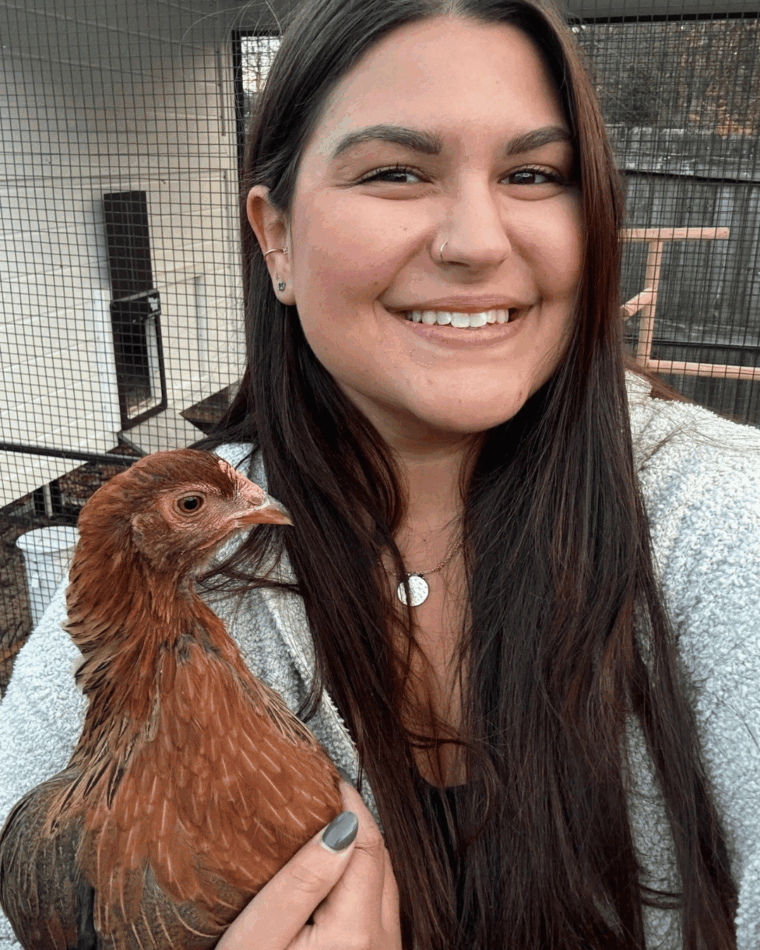
What’s clear is that the chickens are more than just egg producers. They’re companions, compost workers, pest controllers and part of a living, breathing system.
“It just reminds you of what humans are supposed to do,” she says. “Grow food. Share it. Swap with neighbors. Work with nature instead of against it.”
What’s clear is that the chickens are more than just egg producers. They’re companions, compost workers, pest controllers and part of a living, breathing system.
Thanks to Meg for her time and the really interesting interview. You can find tips, recipes and more from Meg via her website: https://meg-grows-plants.myshopify.com/
This entry was posted in Chickens