 FREE shipping on orders over $100
  10% off your first order
  180-day guarantee
 More than a chicken: protecting Britain’s rare breeds with Jimmy Doherty

From the short-legged Scots Dumpy to Suffolk’s own Ixworth, Britain’s heritage chicken breeds each have a story to tell. We caught up with Jimmy Doherty of Jimmy’s Farm to talk rare breeds, why protecting them matters and the role everyday chicken keepers can play in keeping them around for generations to come.
Spend enough time around chickens and you’ll soon realise there’s no such thing as just a chicken. Between breeds, there are huge differences in everything from temperament and appearance to how much they want to roam and forage, and behind many of Britain’s native breeds is a history that goes back hundreds of years. For Jimmy Doherty, farmer, conservationist, Vice-President of the Rare Breeds Survival Trust and Patron of the British Hen Welfare Trust, that’s exactly why they’re worth protecting.
“Rare breeds are a living part of our history,” he says. “These breeds have been developed over generations, often for particular landscapes, and once you lose a breed, you can’t simply recreate it.”
A living piece of history
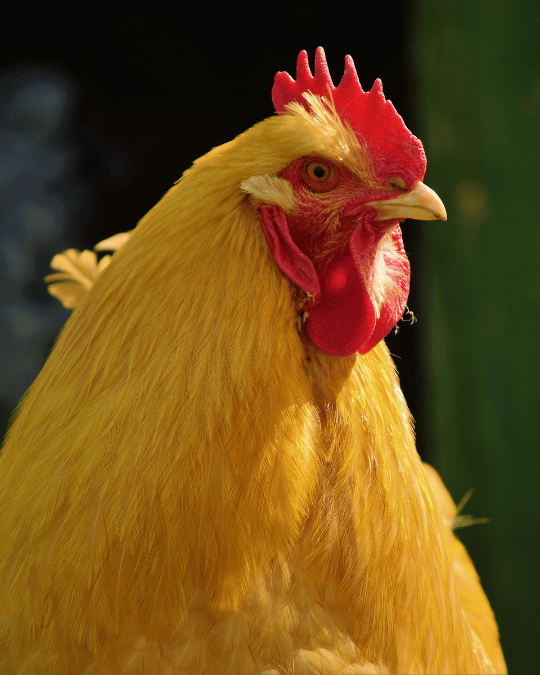
Jimmy’s Farm & Wildlife Park in Suffolk is home to some brilliant examples, including Buff Orpingtons, Scots Greys and the wonderfully distinctive Scots Dumpy, an ancient breed known for its remarkably short legs. There’s one that has a particular connection to the farm… “I’d probably have to say the Ixworth,” Jimmy says when we ask him to choose a favorite. “There’s a bit of local bias there because we’re in Suffolk and it’s a Suffolk breed, but that’s exactly why I think it’s so important.” Developed by Reginald Appleyard and named after the Suffolk village of Ixworth, it’s a breed with its roots firmly in the local area.
“You can travel around Britain and find these wonderful breeds that tell you something about the area they came from and the people who farmed there.” For Jimmy, keeping those breeds going isn’t about preserving a piece of the past for the sake of it. “Conserving rare breeds isn’t about keeping something alive in a museum. These animals need a purpose, they need people keeping them, breeding them and valuing them.”
Why diversity matters
There’s a practical reason for protecting that variety too. “It’s also about genetic diversity,” Jimmy explains. “Modern agriculture relies on a relatively small number of highly productive breeds and strains, but you never know what characteristics we’re going to need in the future.” That could be hardiness or disease resilience, or a breed’s ability to thrive outdoors and adapt to a changing climate. Traditional breeds can bring qualities that aren’t necessarily measured by how many eggs end up in the nest box.
“Some of the modern commercial laying strains have been selected specifically to produce huge numbers of eggs, whereas traditional breeds may lay fewer but bring other characteristics: hardiness, longevity, foraging ability, broodiness or suitability for a particular environment.”
Breed can have a big influence on temperament too. The Buff Orpingtons at Jimmy’s Farm are generally placid and friendly, while the Scots Grey is naturally more alert and active, but it goes beyond the breed. “Of course, every chicken is an individual as well,” Jimmy adds. “Spend enough time around them and you soon realise they’ve all got personalities.” Chicken keepers probably won’t need much convincing on that one.
Conservation can start in your backyard
Rare breed conservation might sound like something that can only happen at places like Jimmy’s Farm, but everyday chicken keepers have a part to play too. How big a part? According to Jimmy: “A massive one!”
“Conservation doesn’t only happen in wildlife parks, zoos or specialist breeding centres. If somebody has the space and has done their research, keeping a native breed can genuinely contribute to keeping that breed relevant and visible.” The research part matters – Jimmy recommends looking at which breeds are under pressure and speaking to breed societies and responsible breeders before deciding what’s right for you.
“What do you actually want from your chickens? Do you want eggs? Are you interested in conserving a rare breed? How much space have you got? How much time can you give them?” It can be very easy to fall for a particularly fluffy or pretty looking chicken, but there’s more to choosing a breed than looks.
“People sometimes choose a chicken because they love the way it looks, but breeds can behave very differently,” Jimmy says. “I’d always encourage people to do their homework first and choose a breed that suits the life they can actually provide.”
Different birds, different needs
The differences become pretty obvious when you put a big Buff Orpington next to a short-legged Scots Dumpy. “All chickens aren’t built the same,” Jimmy says.
Orpingtons are large, heavy birds, while a Scots Dumpy’s proportions bring different considerations. More active breeds, meanwhile, need plenty of opportunity to explore and forage. It’s why a good setup is about more than how many chickens a space can technically accommodate. “You’ve got to look at the birds themselves and ask whether that environment allows them to behave naturally and comfortably.”
There are essentials that every flock needs, of course, including a dry, secure place to sleep, good ventilation and protection from predators. They also need the space and opportunity to scratch, forage, dust bathe and generally get on with being chickens. “Good husbandry isn’t particularly glamorous,” Jimmy says, “but it’s the foundation of keeping animals well.”
Heritage chickens, meet Omlet
Jimmy’s rare breed flocks have recently moved into Omlet Eglu Chicken Coops, so naturally we wanted to know how they were getting on…
“They’re getting on really well! Chickens are naturally inquisitive animals, so whenever you change something in their environment there’s always that period where they investigate it and work everything out.” For Jimmy and the team, it’s the practicality of the coops that has stood out. “When you’re looking after animals every day, you quickly discover that clever design isn’t about gimmicks – it’s about making those everyday jobs simpler while still giving the animal what it needs.”
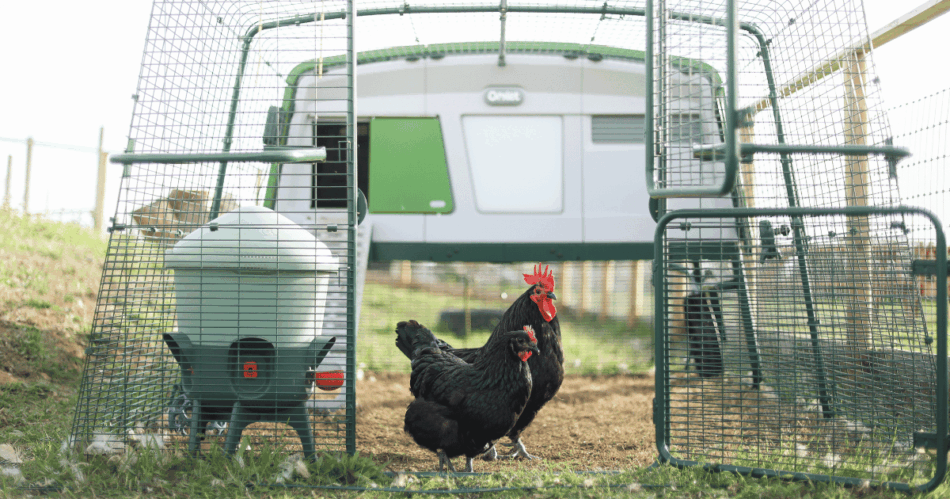
Cleaning is a big part of that – it’s one of those jobs every chicken keeper has to do, and the easier it is to do properly, the better.
“Cleanliness is particularly important because if something is difficult and time-consuming to clean, there’s always the danger that it doesn’t get cleaned as thoroughly or as frequently as it should. Anything that makes good husbandry easier and more consistent is a positive. The fact that the Omlet coops are straightforward to access and clean is a big advantage, and having something that’s robust and secure gives you peace of mind as well.”
The Omlet Eglu Chicken Coops also give visitors to Jimmy’s Farm a chance to see what a good chicken setup can look like – especially useful when meeting the residents has them contemplating a flock of their own. “People see our chickens here, fall in love with them and quite often start thinking, ‘Could I keep chickens at home?’ So being able to demonstrate good housing is really useful.”
Look a little closer
So, what does Jimmy hope people take away after meeting these birds? “I’d love them to stop thinking of a chicken as simply a chicken!” An Ixworth isn’t a Scots Dumpy, and neither is a Buff Orpington. Once you start looking into where these breeds came from and what makes them different, there’s a lot more to discover.
“We shouldn’t assume that because we’ve had these breeds for hundreds of years they’ll automatically be here for hundreds more.”
For some chicken keepers, that might mean considering a heritage breed for a future flock. For others, it could simply mean discovering a breed they’d never heard of before, supporting a responsible breeder or finding out more about the work of the Rare Breeds Survival Trust.
“Ultimately, you protect what you value,” Jimmy says. “And before people can value these breeds, they’ve got to know they exist.”
This entry was posted in Chickens